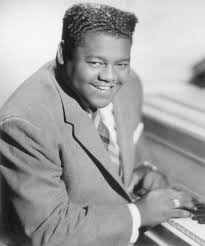
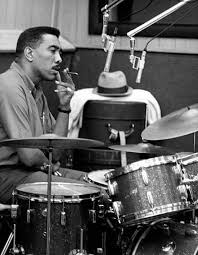
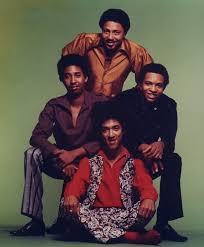
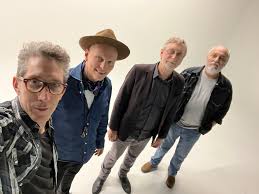
New Orleans' contribution to the invention of rock and roll is often underacknowledged but was absolutely foundational. Fats Domino's recordings from the late 1940s onward — particularly 'The Fat Man' (1949) — are among the first rock and roll records. Earl Palmer's straight-eight drum beat, developed at Cosimo Matassa's studio, replaced the swing rhythms of jazz with the driving pulse that would power rock and roll for generations.
Little Richard recorded many of his greatest early sides in New Orleans, at Matassa's studio and with New Orleans musicians. The wildness and abandon of his performances was in part a product of the city's musical environment — the freeness and physicality of New Orleans music gave rock and roll much of its early character.
The Meters, who formed in 1965, created a sound that was simultaneously funk and proto-rock — their recordings influenced the jam band movement, punk (they were a favorite of the Clash), and the alternative rock scene of the 1990s. The Rolling Stones recorded with New Orleans musicians and acknowledged the city's influence on their early sound.
The contemporary New Orleans rock scene is centered around venues like Tipitina's, The Broadside, and Carrollton Station, and it has produced bands like the Iguanas — whose eclectic roots rock defies easy categorization — and a thriving indie rock underground. Paul Sanchez and Alex McMurray bring a literary, singer-songwriter sensibility to rock-inflected music that is distinctly of this city.