The singer-songwriter tradition in New Orleans exists in productive tension with the city's more communal musical forms. Where jazz and brass band music emphasize collective improvisation and participation, the singer-songwriter tradition is individual and confessional — one person, one guitar, one set of stories. But in New Orleans, that tradition is inevitably inflected by the city's other musical identities.
Paul Sanchez, who came to prominence as part of the band Cowboy Mouth in the late 1980s before pursuing a solo career, is the central figure in the contemporary New Orleans singer-songwriter scene. His songs are full of specific New Orleans characters and places, told with a storyteller's gift for detail and a musician's gift for melody. His work — and the show Til the Water is All Gone, which he created about Hurricane Katrina — represents the singer-songwriter tradition at its most specifically New Orleans.
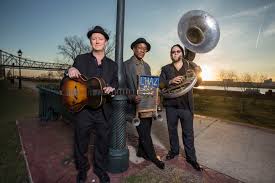
Alex McMurray, who plays in the Tin Men alongside Matt Perrine and Will Blanchard, is a guitarist and songwriter of unusual gifts — sardonic, literary, and deeply rooted in the blues and Americana traditions while sounding entirely like himself. His collaborations with McMurray and the broader Frenchmen Street community have produced some of the most interesting music to come from the city in recent decades.
Susan Cowsill found her truest voice in New Orleans after years in other musical contexts. Her album Lighthouse, recorded after Katrina, is one of the essential documents of the post-storm period — personal, political, and musically rich. Dayna Kurtz and John Boutté bring jazz and soul inflections to the singer-songwriter form, creating work that is distinctly of New Orleans while reaching beyond its traditions.