If you want to understand New Orleans music, start at the piano. Not the trumpet, not the parade drum — the piano. In New Orleans the piano is a rhythm instrument first and a melody instrument second, and nearly everything the city exported to the rest of American music — rock and roll, R&B, funk — passed through somebody's left hand on a keyboard in a New Orleans club, studio, or front room.
The point of this guide is simple: hear the music, and if it grabs you, buy it. Every entry below leads with Listen & Buy links — the artist's nolamusic.net page, where the Listen bar carries Spotify and Apple Music, plus Louisiana Music Factory, Euclid Records, and Amazon for buying. The prose is the invitation; the links are the purpose.
What follows is an introduction, not an encyclopedia: the sound itself, the line of players who made it, and the living musicians still carrying it. Every artist below has a page on nolamusic.net, linked at the top of each entry.
What it sounds like
Five things to listen for. Once you hear them, you'll recognize the style anywhere.
The rumba-boogie left hand. Jelly Roll Morton called the Caribbean influence in New Orleans music the "Spanish tinge." Professor Longhair took the rolling left hand of boogie-woogie, crossed it with Cuban rumba and habanera rhythm, and made a shuffle-rumba hybrid that, by the mid-1950s, had filtered straight through to rock and roll. Hear it in Longhair's "Mardi Gras in New Orleans" (1949) and in Smiley Lewis's "Tee-Nah-Nah" (c. 1950), with Tuts Washington on piano.
Rolling right-hand triplets over a pumping bass. The left hand pumps out bass patterns while the right hand unfurls melodic flourishes and cascading rolls — funky and driving, yet easy rolling and relaxed. Hear it in Longhair's "Tipitina" (1953) and Huey "Piano" Smith's "Rockin' Pneumonia and the Boogie Woogie Flu" (1957).
The second-line feel. The music moves the way dancers move behind a parade band: unhurried, graceful, and funky all at once. Hear it in Longhair's "Big Chief" and in Dr. John's version of "Iko Iko" on Dr. John's Gumbo (1972).
Triplet-based chord hammering. Fats Domino's variant was simpler and harder: triad chords over a boogie pattern, forcefully played, hammered in triplets. Hear it in "Blueberry Hill" (1956).
Barrelhouse roots. Before the rumba hybrid there was the barrelhouse: a rolling, rhythmic left hand that provided bass and percussion at once, with octave walking and right-hand ornamentation. Tuts Washington is the living bridge from that world. Watch him at the 1984 New Orleans Jazz & Heritage Festival — link below — and you can hear the nineteenth century in it.
The professors
Isidore "Tuts" Washington (1907–1984)
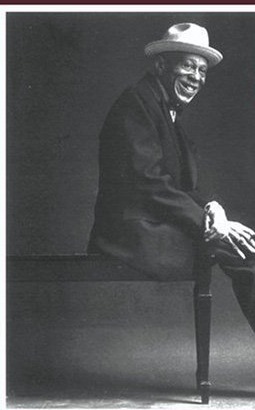
Every lineage needs an elder, and Tuts Washington is this one. Born in New Orleans in 1907, Washington taught himself piano at ten and studied with Joseph Louis "Red" Cayou. Through the 1920s and '30s he was a leading player for dance and Dixieland bands, blending ragtime, jazz, blues, and boogie-woogie. After World War II he joined Smiley Lewis's trio and cut landmark New Orleans R&B sides for Imperial Records before their 1952 breakup: "Tee-Nah-Nah," "The Bells Are Ringing," "Dirty People."
He was also the teacher. A young Roy Byrd — years before he became Professor Longhair — followed Washington around picking up his style. In the 1950s Washington was a principal teacher of James Booker, and a direct influence on Allen Toussaint. One man, three of the tradition's giants.
Washington mostly avoided recording — he considered records a means to attain work, and he had all the work he needed. His only solo album, New Orleans Piano Professor, was recorded in 1983, shortly before his death. He died of a heart attack on August 5, 1984, while performing at the New Orleans World's Fair.
Start with: "Tee-Nah-Nah" (Smiley Lewis with Tuts Washington, c. 1950); New Orleans Piano Professor (Rounder, 1983).
Watch: Tuts Washington, New Orleans Jazz & Heritage Festival, 1984 — https://www.youtube.com/watch?v=Mtes8daaJYo
Professor Longhair — Henry Roeland Byrd (1918–1980)
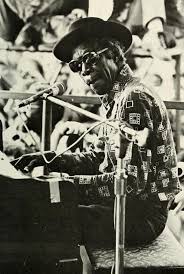
If Tuts Washington is the elder, Professor Longhair is the center of gravity. Dr. John called him "the guardian angel of the roots of New Orleans music" and "the guru, godfather and spiritual root doctor of all that came under him." Atlantic producer Jerry Wexler called him "the Picasso of keyboard funk." Allen Toussaint called him "the Bach of rock."
Born in Bogalusa, Louisiana, in 1918 and raised in New Orleans, Byrd began taking playing seriously in 1948 at the Caldonia Club, whose owner gave him the "Professor Longhair" nickname for his shaggy coiffure. He debuted on wax in 1949 with the first version of "Mardi Gras in New Orleans." His only national R&B hit was "Bald Head" (1950). In November 1953, Ahmet Ertegun and Jerry Wexler recorded him at Cosimo Matassa's J&M Studios with Lee Allen, Red Tyler, Earl Palmer, and Frank Fields; "Tipitina" became an enduring local favorite, entered the Library of Congress National Recording Registry in 2011, and is still the song New Orleans measures its pianists against. His 1959 recording of "Go to the Mardi Gras" is still played every Carnival.
Longhair learned from the local 88s aces including Tuts Washington, and became, in AllMusic's phrase, "a founding father of New Orleans R&B" whose influence runs through Fats Domino, Allen Toussaint, James Booker, and Dr. John. He died in New Orleans in January 1980.
Start with: "Mardi Gras in New Orleans" (1949); "Tipitina" b/w "In the Night" (Atlantic, 1953); New Orleans Piano (Atlantic, 1972, compiling his 1949–52 material); Crawfish Fiesta (Alligator, 1980 — Dr. John plays guitar on it).
Watch: "Tipitina" — Professor Longhair & The Meters, 1974 — https://www.youtube.com/watch?v=Yj6AXu7_psY
Fats Domino (1928–2017)
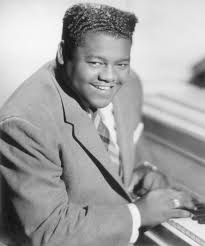
Fats Domino took Longhair's lessons and turned them into the biggest commercial success New Orleans piano ever had. Born Antoine Domino Jr. in New Orleans in 1928, he was taught piano by his brother-in-law, guitarist Harrison Verrett, and discovered by Dave Bartholomew at the Hideaway Club. Signed to Imperial Records in 1949, his first single, "The Fat Man" (1950), is cited by some historians as the first rock-and-roll single — and the first to sell over a million copies.
Then came the run: "Ain't That a Shame" (1955, his first pop crossover), "Blueberry Hill" (1956 — No. 2 pop, No. 1 R&B for 11 weeks, more than five million copies), "I'm Walkin'," "Walking to New Orleans." Eleven Top 10 pop hits between 1955 and 1960; total sales estimated between 65 and 110 million. He was inducted into the Rock and Roll Hall of Fame in its first class, in 1986. Elvis Presley called him "the real king of rock 'n' roll"; the Beatles fashioned "Lady Madonna" in his style. And he never left the lineage behind: like Huey Smith and Allen Toussaint, he paid homage to Longhair early and often — every Crescent City piano man had to learn Longhair's style inside out.
Start with: "The Fat Man" (1950); "Blueberry Hill" (1956); "Walking to New Orleans" (1960).
Watch: "Blueberry Hill" — https://www.youtube.com/watch?v=8mix3gmzPa0 · "Walking to New Orleans" — https://www.youtube.com/watch?v=aTQs34AdlFE
Huey "Piano" Smith (1934–2023)
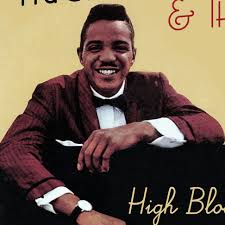
Huey Smith is the good-time branch of the family tree. Born in New Orleans in 1934, he began piano at fifteen, learning boogie-woogie in the manner of Meade Lux Lewis and Albert Ammons plus local heroes Fats Domino and Professor Longhair. He became the go-to session pianist on Smiley Lewis's "I Hear You Knockin'" and on Lloyd Price and Little Richard sessions, then formed Huey Smith and the Clowns, with Bobby Marchan, for Ace Records.
The Clowns' run — "Rockin' Pneumonia and the Boogie Woogie Flu" (1957, Top 5 R&B), "Don't You Just Know It" / "High Blood Pressure" (1958, pop Top 10), "Sea Cruise" (1959) — is New Orleans R&B at its most infectious and rollicking, in AllMusic's words. "Sea Cruise" carries its own footnote: Ace had white teen singer Frankie Ford overdub the vocal for pop airplay, and the record became a nationwide hit. Smith became a Jehovah's Witness in the early 1980s and performed infrequently afterward. He died in Baton Rouge in February 2023, age 89.
Start with: "Rockin' Pneumonia and the Boogie Woogie Flu" (1957); "Don't You Just Know It" / "High Blood Pressure" (1958).
Watch: "Rockin' Pneumonia and the Boogie Woogie Flu" (both parts) — https://www.youtube.com/watch?v=03o-6To7xMQ
Allen Toussaint (1938–2015)
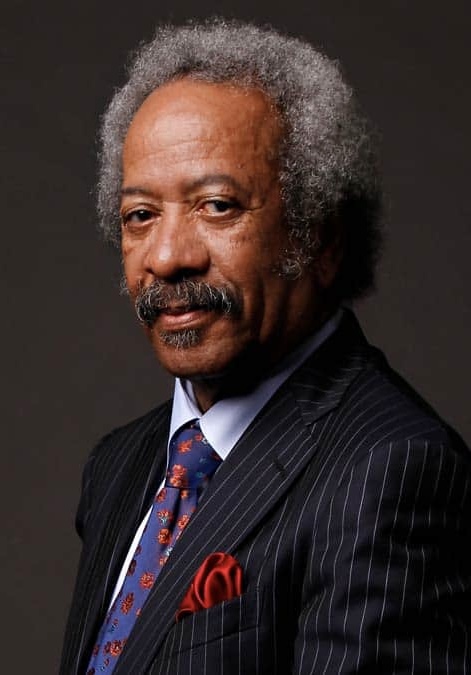
Allen Toussaint is where the piano line turns into the whole of New Orleans music. Born in the Gert Town neighborhood in 1938, he was self-taught on his sister's piano from about age five, called Professor Longhair "the Bach of rock," and said of first hearing him as a child: "that just knocked me out." Dave Bartholomew hired him for sessions at Cosimo Matassa's studio, including piano tracks on Fats Domino songs — Domino said he couldn't tell the substitute from his own playing.
Toussaint's career ran in every direction at once: his 1958 album The Wild Sounds of New Orleans (as "Al Tousan"), recorded in two days, included "Java," a No. 4 hit for Al Hirt in 1963. At twenty-two he became house producer, arranger, and songwriter for Minit Records: Jesse Hill's "Ooo Poo Pah Do," Ernie K-Doe's "Mother-In-Law" (No. 1), Lee Dorsey's "Ya Ya." He co-founded Sea-Saint Studios in the early 1970s, produced LaBelle's "Lady Marmalade" (1975), and wrote "Fortune Teller" (covered by the Rolling Stones), "Working in the Coal Mine," and "Get Out of My Life, Woman." After Hurricane Katrina, a Joe's Pub residency led to the Grammy-nominated The River in Reverse (2006) with Elvis Costello. His final album, American Tunes (Nonesuch, 2016), is solo piano: works by Toussaint, Ellington, Professor Longhair, Fats Waller, and Paul Simon. He was inducted into the Rock and Roll Hall of Fame in 1998 and died in Madrid in November 2015, hours after a concert.
Start with: The Wild Sounds of New Orleans (1958, as Al Tousan); American Tunes (2016).
Watch: "Southern Nights" (performance clip) — https://www.youtube.com/watch?v=4EihE9a_mEE
James Booker (1939–1983)
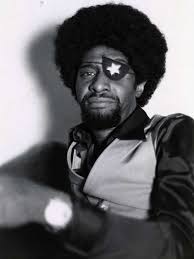
James Booker is the one who makes musicians stop talking. Harry Connick Jr. — whom Booker tutored in the mid-1970s — said that if all the American piano players lined up in a row, each knowing the others' abilities, all would take a step back to recognize the greatest of all. Dr. John called him "the best black, gay, one-eyed junkie piano genius New Orleans has ever produced."
Born in New Orleans in 1939 to a family of Baptist ministers who both played piano, Booker had classical training from age six — he could memorize Bach and Chopin — balanced with blues and boogie learned from Tuts Washington and Edward Frank, plus Longhair and Ray Charles. His debut single, "Doin' the Hambone" (as "Little Booker"), came on Imperial in 1954, produced by Dave Bartholomew. He did session work behind Fats Domino, Smiley Lewis, Lloyd Price, Earl King, and Aretha Franklin, among others. His only career hit was "Gonzo" (1960), an organ instrumental that reached No. 3 R&B. A heroin conviction in 1967 and time at Angola broke his momentum.
The rediscovery came in 1975, when a Jazz Fest performance won him an Island Records deal. Junco Partner (1976, produced by Joe Boyd) is his most celebrated album. He toured with Dr. John's band and the Jerry Garcia Band, and ended as house pianist at the Maple Leaf Bar. He died in New Orleans in November 1983, age 43 — "the Black Liberace," "the Piano Prince of New Orleans," "the Bayou Maharajah." He is the bridge figure of the whole tradition: student of Tuts Washington and of Longhair's style, teacher to Harry Connick Jr., influence on Dr. John and Henry Butler.
Start with: Junco Partner (Island, 1976); New Orleans Piano Wizard: Live! (1977).
Watch: James Booker, live at Montreux Jazz, July 9, 1978 (full concert) — https://www.youtube.com/watch?v=234Mq_xBR8Q
Dr. John — Malcolm John Rebennack Jr. (1941–2019)
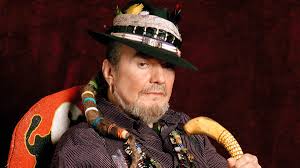
Dr. John is the tradition's great synthesizer — the man who took everything above and turned it into a stage persona the whole world recognized. Born in New Orleans in 1941, he began recording professionally at Cosimo Matassa's J&M Studios in 1956, at fifteen, on sessions for Eddie Bo, Paul Gayten, Roy Brown, Earl King, and Joe Tex. At thirteen he had seen Longhair play "those double-note crossovers and over-and-unders and second-line rhythms" and never got over it; decades later he played guitar on Longhair's last album, Crawfish Fiesta (1980).
As Dr. John the Night Tripper he debuted with Gris-Gris (1968), then made Dr. John's Gumbo (1972), an album of New Orleans R&B standards — "Tipitina," "Junko Partner," "Iko Iko" — and In the Right Place (1973), produced by Allen Toussaint with the Meters, containing "Right Place Wrong Time," his only Top 40 single. Six Grammy Awards, more than thirty albums, Rock and Roll Hall of Fame in 2011. His solo piano album Dr. John Plays Mac Rebennack (1981) is the record to play for anyone who thinks the Night Tripper was only a costume.
Start with: Gris-Gris (1968); Dr. John's Gumbo (1972); In the Right Place (1973); Dr. John Plays Mac Rebennack (1981).
Watch: "Right Place Wrong Time" (official audio, RHINO) — https://www.youtube.com/watch?v=W4PjWgiH-LQ
The wider circle: Eddie Bo (1930–2009)
Eddie Bo sits slightly off the main professor-to-professor line, and that's exactly why he's here. Born Edwin Joseph Bocage in New Orleans in 1930, he debuted on Ace Records in 1955 and released more 45s than any New Orleans artist except Fats Domino, recording for more than forty labels. His biggest national hit was "Hook and Sling (Pts. 1 & 2)" (1969, No. 13 R&B); his first hit was the novelty "Check Mr. Popeye" (1961). As a songwriter he wrote "My Dearest Darling" for Etta James, and his "I'm Wise" (1956) became Little Richard's "Slippin' and Slidin'." He produced for Irma Thomas, Art Neville, Chris Kenner, and Johnny Adams.
At the piano, Bo studied composition and arranging at the Grunewald School of Music, and his bebop voicings show the influence of Art Tatum and Oscar Peterson — alongside his mother and Professor Longhair, whose playing styles were similar. WWOZ called him "the last of the 'junker'-style pianists, fusing jazz, R&B, funk, soul, and blues seasoned with New Orleans flavor." May 22, 1997 was declared "Eddie Bo Day" in New Orleans.
Start with: "Hook and Sling (Pts. 1 & 2)" (1969); "Check Mr. Popeye" (1961).
Watch: "Funky Jam" (from The Hook and Sling) — https://www.youtube.com/watch?v=ZSJUApvIf30
The living tradition
The line didn't end with Dr. John. Five living players carry it now, each in a different direction — and all five are still working, so this section will date faster than the rest. Check their nolamusic.net pages for current gigs.

Jon Cleary (b. 1962) is the most direct heir. Born in Cranbrook, Kent, England, he moved to New Orleans at seventeen in 1980; his first job was painting the walls at the Maple Leaf Bar, and his first piano gig came when James Booker no-showed and the manager pushed him onstage. He absorbed Booker and Longhair at the Maple Leaf while painting it. He won the 2016 Grammy for Best Regional Roots Music Album for GoGo Juice (2015), with horn arrangements by Allen Toussaint, and his album The Bywater Sessions was released April 25, 2025. His latest, Live at the Royal Albert Hall (FHQ Records, released October 2, 2026), captures his sold-out solo debut at London's Royal Albert Hall on June 16, 2025 — eleven tracks of originals and tributes to the piano legends, including "Fessa Longhair Boogaloo" and the recorded debut of "Poor Boy Blues," written around the time of Fats Domino's passing. As he put it on The Bywater Sessions: "Sophisticated, nasty, good-time, low-down funk is the folk music of New Orleans. Everyone playing on this recording is a New Orleanian by birth or by choice, having learned their craft at the feet of the masters who in turn were taught by the old lions in their day — it's a tradition stretching back over two hundred years."
Start with: Live at the Royal Albert Hall (2026); GoGo Juice (2015); The Bywater Sessions (2025).
Watch: GoGo Juice teaser — https://www.youtube.com/watch?v=7c15B6fLqzo · KNKX studio session — https://www.youtube.com/watch?v=7LH5_3m35Dk
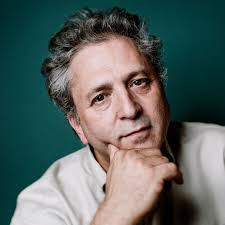
David Torkanowsky (b. 1956) took the tradition into modern jazz and composing. Born in New Orleans to a classical conductor father and a flamenco artist mother, he was schooled by Danny Barker, David Lastie, and Ellis Marsalis, studied under James Booker, and briefly attended Berklee. He was the founding pianist of Astral Project, one of the city's premier modern-jazz groups, and has appeared on nearly 200 recordings as sideman, composer, arranger, or leader, including a long stint as music director for Dianne Reeves. His film and television scoring includes The Big Easy (1996), Alabama Moon (2009), Preacher (2016), Treme, and NCIS: New Orleans. No verified playable clips were found for him — use the Listen bar on his artist page.
Start with: Astral Project, Elevado (Compass, 1998) and VooDooBop (Compass).
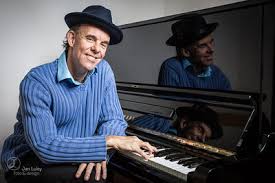
Tom McDermott (b. 1957) took it sideways — into ragtime, stride, and Brazil. Born in St. Louis, playing piano from age seven and professional at sixteen, he moved to New Orleans in 1984, played with the Dukes of Dixieland through much of the 1990s, co-founded the New Orleans Nightcrawlers in 1994, and has made 17 CDs as a leader. Since 2001 he has made sixteen trips to Brazil studying and recording choro — "Brazilian ragtime" — and woven it into his New Orleans repertoire. His style, in one summary, "mixes the percussive drive of Professor Longhair, the rhythmic sophistication of James Booker, and the syncopated bounce of classic ragtime." No verified playable clips were found for him — use the Listen bar on his artist page.
Start with: All the Keys and Then Some (1996); The Crave (STR); Louisianthology (1998).
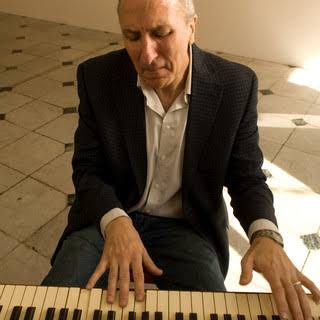
Joe Krown took it to the Hammond organ and the Maple Leaf's piano bench. A New York native long based in New Orleans, he held the keyboard chair with Clarence "Gatemouth" Brown & Gate's Express from 1992 until Gatemouth's death in 2005 — including 62 dates in 1995 opening for Eric Clapton's world tour. He held the Traditional Piano Night slot at the Maple Leaf Bar — once occupied by Professor Longhair and James Booker — from September 1996 to June 2001, then at Le Bon Temps Roule, and has headlined WWOZ's Piano Night during Jazz Fest every year since 1997. His solo debut, Just the Piano…Just the Blues (1998), is solo piano in traditional blues and boogie-woogie; the Joe Krown Organ Combo (from 1999) is Hammond B-3 funk. No verified playable clips were found for him — use the Listen bar on his artist page.
Start with: Just the Piano…Just the Blues (1998); New Orleans Piano Rolls (2003); Joe Krown Organ Combo, Funk Yard (2002).

River Eckert (b. 2009) is where the line is going. Seventeen years old, a pianist and vocalist, the son of guitarist Jake Eckert (New Orleans Suspects, Dirty Dozen Brass Band), he started piano at age three — classical first, then steered toward blues — and he is already carrying the tradition the guide just traced: the lineage of Professor Longhair, James Booker, Dr. John, Fats Domino, and Allen Toussaint, named on his own page. His debut single, "Pass That Torch" featuring Ivan Neville, arrived in October 2024, followed by "Hey Hey Hey (Fi Nah Nay)" in February 2025 and "Painting Pictures" in April 2025. His self-titled debut album on Funky 88 Records followed in April 2026, with George Porter Jr., Ivan Neville, Terence Higgins, Cornell Williams, Raymond Weber, and John Fohl among the collaborators — and he is fresh off his first European tour, honored with a 2026 Emerging Artist Award. If the professors are the past and Cleary and company are the present, River Eckert is the argument that the tradition has a future. The title of his debut single says it all.
Start with: "Pass That Torch" featuring Ivan Neville (2024); River Eckert (Funky 88 Records, 2026).
Watch the film
If this guide whets the appetite, the next step is Piano Players Rarely Ever Play Together (1982, directed by Stevenson Palfi, 76 minutes) — portraits of three generations: Tuts Washington, Professor Longhair, and Allen Toussaint. Longhair died during filming, before the planned three-piano concert, and the film includes his jazz funeral; it ends with Toussaint and Washington turning their concert into a tribute to "Fess." It won more than twenty awards, and it is the single best hour and a quarter you can spend on this subject. As of October 2026 it isn't streaming on any major service, and the DVD is out of print — secondhand copies trade at collector prices, so it takes some hunting.
A first listening path
If you want five records, in order:
- Professor Longhair, "Tipitina" (1953) — the sound itself.
- Fats Domino, "Blueberry Hill" (1956) — the sound conquering the world.
- James Booker, Junco Partner (1976) — the sound at its most dazzling and most haunted.
- Allen Toussaint, American Tunes (2016) — the sound distilled to one man and one piano, at the end of a life.
- Jon Cleary, Live at the Royal Albert Hall (2026) — the sound alive, right now, in a sold-out London hall turned into a New Orleans jook joint.
Then go back to Tuts Washington's New Orleans Piano Professor and hear where it all started.
More in this series
Introduction to New Orleans Music — six guides to the sounds that built the city. Piano · Trumpet · Trombone · Clarinet · Drums · Singer/Songwriters. See all six guides →