In the early New Orleans ensemble, the clarinet was the weaving voice. While the trumpet carried the melody and the trombone answered underneath, the clarinet embroidered around them both — running countermelodies, arpeggios, and blue notes at a speed no other horn could match, with a cry that could sound like a human voice. It was the most technically demanding chair in the band and, in the hands of a master, the most thrilling.
The point of this guide is simple: hear the music, and if it grabs you, buy it. Every entry below leads with Listen & Buy links — the artist's nolamusic.net page, where the Listen bar carries Spotify and Apple Music, plus Louisiana Music Factory, Euclid Records, and Amazon for buying. The prose is the invitation; the links are the purpose.
What follows is an introduction, not an encyclopedia: the sound itself, the line of players who made it, and the living musicians still carrying it. Every artist below has a page on nolamusic.net, linked at the top of each entry.
What it sounds like
Six things to listen for. Once you hear them, you'll recognize the style anywhere.
The weaving middle voice. In the early ensemble the clarinet embroidered around the trumpet and trombone, running countermelodies, arpeggios, and blue notes at a speed no other horn could match. It was the most technically demanding chair in the band and, in the hands of a master, the most thrilling. Hear it in Bechet's 1923 New York sides with Clarence Williams, including the ones with Louis Armstrong.
The vocal vibrato. Sidney Bechet's wide, singing vibrato — often linked to his admiration for the operatic tenor Enrico Caruso — made his horn sound like a voice. He played clarinet almost exclusively until about 1919, then discovered the straight soprano saxophone in London and became jazz's first great soprano saxophonist, but the vibrato is the same on both horns. Hear it in "Petite Fleur," recorded in Paris in 1952.
The revival sound: simple, melodic, ensemble-first. George Lewis played the Albert-system clarinet with a sound that was melodic and ensemble-oriented rather than virtuosic, and he became the central clarinet voice of the New Orleans revival. Hear it in "Burgundy Street Blues," improvised at his bedside while he recovered from a dock accident in 1944.
The singing Dixieland tone. Pete Fountain's warm, singing, swing-inflected tone — drive from Benny Goodman, roundness from Irving Fazola — made him one of New Orleans' most commercially successful jazz artists. Hear it in "Just a Closer Walk With Thee," his signature tune.
The scholar's line. Dr. Michael White plays the tradition as a lineage: his cited influences run from Bechet, Johnny Dodds, and Barney Bigard through George Lewis, and his Original Liberty Jazz Band has carried that sound since 1981. Hear it in Blue Crescent (2008), his first post-Katrina album, written partly at an artists' retreat after the flood destroyed his Gentilly home and jazz archive.
The living street voice. The clarinet still works outdoors in New Orleans: Doreen Ketchens on her Royal Street corner, Charlie Gabriel at Preservation Hall, Tim Laughlin writing new originals in the old idiom, Gregory Agid bridging modern jazz and the Batiste line. Hear it in Ketchens playing "When the Saints Go Marching In" on Royal Street.
The founders
Sidney Bechet (1897–1959)
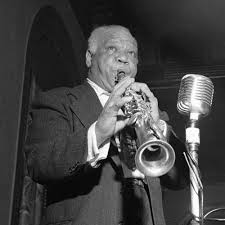
Sidney Joseph Bechet was born May 14, 1897, in New Orleans, into a middle-class Creole family, and died May 14, 1959 — his 62nd birthday — in Garches, near Paris. Largely self-taught, he took up the clarinet around age six, studying with Lorenzo Tio Jr., Louis "Big Eye" Nelson, and George Baquet, and as a child he was already sitting in with leading New Orleans bands, including Buddie Petit's Young Olympians and the Eagle Band. He left New Orleans permanently in the summer of 1917, worked in Chicago, and in June 1919 traveled to Europe with Will Marion Cook's Southern Syncopated Orchestra, where the Swiss conductor Ernest Ansermet heard him and praised him in print as an artist of genius.
Clarinet came first, soprano saxophone second and ultimately signature: he played clarinet almost exclusively until about 1919, discovered the straight soprano saxophone in London on the 1919 tour, and became jazz's first great soprano saxophonist. In 1923 he began recording in New York with Clarence Williams, including sides with Louis Armstrong. He worked with Duke Ellington and Noble Sissle's orchestra, and in 1941 made an early overdubbed one-man-band recording of "The Sheik of Araby" on six instruments — clarinet, soprano and tenor saxophone, piano, bass, and drums. After a Paris shooting incident in 1929 he was jailed for eleven months. He made his permanent home in France from the summer of 1951 and became a celebrity there; his compositions "Petite Fleur" (recorded in Paris on January 21, 1952) and "Les Oignons" (France, 1949, with Claude Luter) became his best-known works, and "Summertime" dates to his 1939 Blue Note session.
Start with: Sidney Bechet's Blue Note Jazzmen (1950); Jazz Festival Concert Paris (1952); Dixie by the Fabulous Sidney Bechet (1953); The Best of Sidney Bechet (1994 compilation, including the 1939 "Summertime").
Watch: "Petite Fleur" (Sidney Bechet All Stars, 1952) — https://www.youtube.com/watch?v=r5gcbLylbMs · "Summertime" (1939) — https://www.youtube.com/watch?v=KlGMS_avVGA
George Lewis (1900–1968)
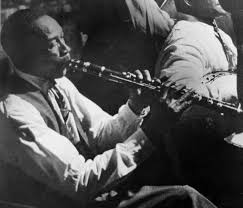
Born Joseph Louis Francois Zenon on July 13, 1900, in the French Quarter, George Lewis was the soul of the New Orleans jazz revival. A largely self-taught clarinetist — his first instrument was a tin fife, with early training from Isidore Fritz in the Black Eagle Band of Mandeville — he was playing professionally by 1917, aged seventeen, with Buddy Petit, Chris Kelly, and Kid Ory, while working for years as a Mississippi stevedore. He was a clarinetist who also doubled on alto saxophone, notably during a 1947–48 residency at Manny's Tavern, but the clarinet was his instrument and identity.
In 1942, when Bill Russell and other enthusiasts came to record trumpeter Bunk Johnson, Johnson chose Lewis as his clarinetist, and Lewis made his first recordings as a leader for Russell's American Music label. In 1944 a dock accident nearly crushed his chest; while convalescing at home, with banjoist Lawrence Marrero and bassist Alcide Pavageau at his bedside and Russell recording, he improvised what became his signature piece, "Burgundy Street Blues." He stayed with Johnson's band through 1946, then led his own band, broadcast regularly from Bourbon Street on WDSU from 1949, was featured in Look magazine in 1950, and toured nationally and in Europe and Japan. From Preservation Hall's opening in 1961 he played there regularly until shortly before his death on December 31, 1968, in New Orleans. His sound — simple, melodic, and ensemble-oriented, on the Albert-system clarinet — made him an influence on players including Sammy Rimington, Tommy Sancton, and Woody Allen.
Start with: New Orleans Jazz Band and Quartet (Riverside, 1954); George Lewis and His New Orleans Stompers, Vol. 1 (Blue Note, 1955); Jazz in the Classic New Orleans Tradition (Riverside, 1956); Jazz at Vespers (recorded 1954, released 1957).
Watch: "Burgundy Street Blues" — https://www.youtube.com/watch?v=tKL-RJDPH3w · "When the Saints Go Marching In" (from Jazz at Vespers) — https://www.youtube.com/watch?v=AfaRzY_m5rU
The popularizer
Pete Fountain (1930–2016)
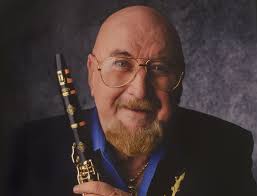
Pierre Dewey LaFontaine Jr., born July 3, 1930, in Tremé on White Street, between Dumaine and St. Ann, was the most beloved clarinetist in New Orleans history — a single-instrument player, clarinet only, throughout. He took up the clarinet as a child on a doctor's advice, as therapy for weak lungs, and was a professional on the Bourbon Street circuit by age fifteen. In 1950 he co-founded the Basin Street Six with trumpeter George Girard, joined the Dukes of Dixieland in 1955, and in 1957 became a featured soloist on The Lawrence Welk Show after Welk's son championed him. He left the show in early 1959 after the famous "Silver Bells" clash over jazzing up a Christmas tune — his own line was "champagne and bourbon don't mix."
Back in New Orleans he signed with Coral Records; his first Coral albums, Pete Fountain's New Orleans and The Blues (both 1959), were big sellers, and "Just a Closer Walk With Thee" became his signature tune, selling over half a million copies around 1959 and charting on the Billboard Hot 100 in 1960. His warm, singing, swing-inflected Dixieland tone — drive from Benny Goodman, roundness from Irving Fazola — made him one of New Orleans' most commercially successful jazz artists. He ran Pete Fountain's club on Bourbon Street, co-founded the Half-Fast Walking Club, played every New Orleans Jazz & Heritage Festival from 1970 to 2013, and retired from active performing in 2014. He died of heart failure on August 6, 2016, in New Orleans, aged 86.
Start with: Pete Fountain's New Orleans (Coral, 1959); The Blues (Coral, 1959); Licorice Stick (Coral, 1964).
Watch: "Closer Walk With Thee / Amazing Grace" — https://www.youtube.com/watch?v=3BP-NGFooJU · "Just a Closer Walk With Thee" — https://www.youtube.com/watch?v=YbJgLmUGSS0
The tradition-bearers
Dr. Michael White (b. 1954)

Michael White, born November 29, 1954, in New Orleans, is a clarinetist, bandleader, composer, scholar, and educator — clarinet only, no second instrument, but many roles. He grew up in a family that included early jazz musicians: bassist Papa John Joseph and clarinetists Willie "Kaiser" Joseph and Earl Fouché. He took up the clarinet as a teenager, played in St. Augustine High School's Marching 100, and began his jazz career as a teenager with Doc Paulin's Brass Band, mentored by Paulin and banjoist Danny Barker. He earned his B.A. from Xavier University of Louisiana in 1976 and his M.A. (1979) and Ph.D. (1984) in Spanish from Tulane University, and formed the Original Liberty Jazz Band in 1981, which he has led ever since.
He taught Spanish and then African American music at Xavier for over four decades, holding the Rosa and Charles Keller Endowed Chair in the Humanities — its first incumbent, from 2002 — and has been professor emeritus since 2023. He was named a 2008 National Heritage Fellow by the National Endowment for the Arts. His Gentilly home and jazz archive were destroyed by Hurricane Katrina flooding in 2005; his first post-storm album, Blue Crescent (2008), written partly at an artists' retreat, is widely cited as one of the finest traditional-jazz recordings of its era. He has also played on Wynton Marsalis's The Majesty of the Blues (1989). His cited influences run from Sidney Bechet, Johnny Dodds, and Barney Bigard through George Lewis — the tradition, carried as a lineage.
Start with: Crescent City Serenade (1990); Jazz from the Soul of New Orleans (2002); Blue Crescent (2008); Adventures in New Orleans Jazz, Pt. 1 (2011).
Watch: Dr. Michael White's Original Liberty Jazz Band, full set (WWOZ, March 28, 2025) — https://www.youtube.com/watch?v=c1JQIZCle60 · "Summertime" (Jazz Fest, May 7, 2011) — https://www.youtube.com/watch?v=sSDYcL_sUQw
Tim Laughlin
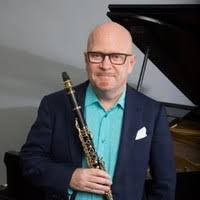
Born and raised in New Orleans, Tim Laughlin got his first clarinet at age nine after hearing a neighborhood friend play, and his first professional job was on a Carnival float at fifteen. In the musicians' union he found his mentors: Danny Barker, Al Hirt, Connie Jones, and his close friend Pete Fountain. The lineage runs straight through the city's clarinet history — Leon Roppolo to Irving Fazola to Fountain to Laughlin — and he carries it as a working traditionalist, a French Quarter Festival and Jazz Fest regular.
What sets him apart is that he writes new repertoire in the old idiom instead of only playing standards. The Isle of Orleans (2003) is an album of his own New Orleans-jazz originals, and he has released more than a dozen solo albums. He played with the Dukes of Dixieland from 1989 to 1993, including Carnegie Hall with the New York Pops in 1992, and with Fountain he opened the Blue Room at the renovated Roosevelt Hotel in 2009, both nights sold out. When Hurricane Katrina hit, his band was on tour in South America, and the U.S. State Department hired them for a month-long goodwill tour thanking donor nations. During the pandemic he played daily balcony concerts from his Royal Street home, drawing local, national, and international news coverage.
Start with: New Orleans' Own (1991); The Isle of Orleans (2003); The Trio Collection, Vol. I (2014); New Standards (2020).
Watch: Tim Laughlin plays clarinet on his French Quarter balcony — https://www.youtube.com/watch?v=JvgwEJmjuxo
The living tradition
Doreen Ketchens (b. 1966)
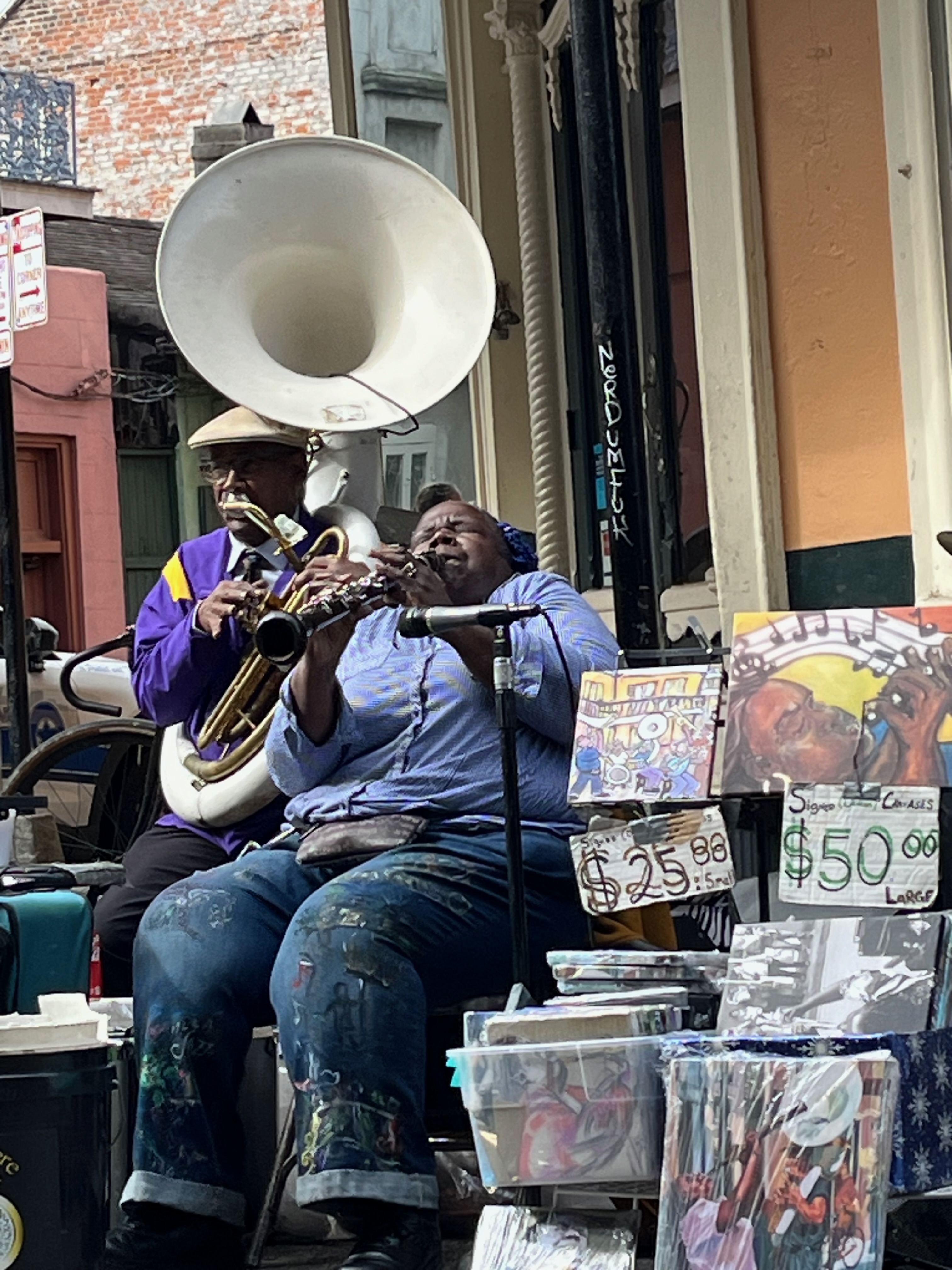
Doreen Ketchens is a Tremé-born clarinetist, vocalist, and bandleader, and the most visible street musician in New Orleans. She took up the clarinet in fifth grade at Joseph Craig Elementary — by her own oft-told account, mainly to escape a history pop quiz, after the flutes were already claimed by other girls. She played at John F. Kennedy High School, auditioned into NOCCA, and went on to Delgado, Loyola, Southern University New Orleans, and the Hartt School in Hartford, working her way through school as a chef. At Loyola she met arranger and sousaphonist Lawrence Ketchens, who became her husband and musical partner and introduced her to jazz.
The couple began street performing in 1987 in Jackson Square as the Jackson Square All-Stars; their band became Doreen's Jazz New Orleans, based in the Royal Street Performing Arts Zone at Royal and St. Peter — "Doreen's corner." Her powerful high register, likened to Louis Armstrong's, earned her the nicknames "Lady Louis," "Queen Clarinet," "Miss Satchmo," and "Ms. New Orleans." She has performed for four U.S. presidents, took part in a 2006 U.S. Department of State cultural exchange in South Africa, and won OffBeat's Best of the Beat Best Clarinetist in 2016 and 2023. She received an honorary Doctorate in Music from Five Towns College in 2022. Her husband Lawrence died on January 31, 2025, aged 61.
Start with: Taipei '94 (1994); Guardians of Our Culture (Takin' It to the Streets) (2017); Live at the 2024 New Orleans Jazz Festival! (2024); Walkin' Through the Streets (2024).
Watch: "When the Saints Go Marching In," live on Royal Street (2012) — https://www.youtube.com/watch?v=L8ydGKtLRJw · "What I Learned from Doreen Ketchens, the Clarinet Queen of New Orleans" (Satchmo SummerFest interview) — https://www.youtube.com/watch?v=WWWrFsTVYcc
Charlie Gabriel (b. 1932)
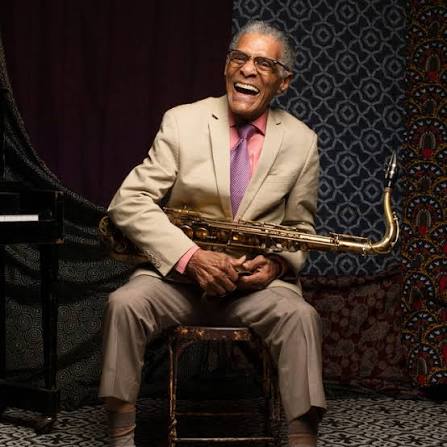
Charlie Gabriel is a fourth-generation New Orleans musician and the living link. Born July 11, 1932, in New Orleans, he comes from a line of players: great-grandfather Narcisse Gabriel on bass, grandfather Martin Joseph on cornet, father Manny Gabriel on drums and clarinet. He made his professional debut at eleven, playing clarinet with the Eureka Brass Band and sitting in for his father during World War II. The family moved to Detroit in the late 1940s, where as a teenager he played with Lionel Hampton's band, then spent nine years with a group led by Cab Calloway drummer J. C. Heard, and performed and recorded with Aretha Franklin, Ella Fitzgerald, and Tony Bennett, and on Motown sessions.
He returned to New Orleans and joined the Preservation Hall Jazz Band in 2006, becoming its most senior member and the Preservation Hall Foundation's Musical Director. After seven decades as a working musician he released his first album as a bandleader, 89 (Sub Pop, 2022), recorded mostly in a kitchen with Ben Jaffe and Joshua Starkman. On it he plays clarinet — his first instrument, returning to it after years away — and tenor saxophone, and sings on three tracks. The title is his age at recording.
Start with: 89 (solo, 2022); That's It! (Preservation Hall Jazz Band, 2013); So It Is (Preservation Hall Jazz Band, 2017); A Tuba to Cuba (Preservation Hall Jazz Band, 2019).
Watch: "I'm Confessin'" (official video, from 89) — https://www.youtube.com/watch?v=O6PE6H-CUF0
Gregory Agid
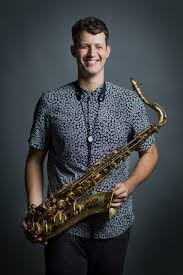
Gregory Agid is the modernist pole of the clarinet story. Born in San Antonio and raised in Honolulu, he got his first clarinet at age seven and moved with his family to New Orleans at twelve in the summer of 2000, where he discovered jazz. At the Louis Armstrong Jazz Camp he learned from Alvin Batiste, Kidd Jordan, and Clyde Kerr; accepted to NOCCA in 2002, Batiste became his mentor — Agid calls him his musical father. His NOCCA classmates included Troy "Trombone Shorty" Andrews, Jon Batiste, and Christian Scott, and in 2005 NOCCA awarded him a grant to study with clarinetist Eddie Daniels in Santa Fe. He graduated from Loyola University New Orleans in 2010 and completed a master's in jazz studies at the University of New Orleans in 2014.
He leads the Gregory Agid Quartet, performs with Delfeayo Marsalis' Uptown Jazz Orchestra, and has toured internationally in Michael Bublé's band. His playing bridges modern jazz and the New Orleans clarinet tradition inherited from Batiste. With drummer Darrian Douglas he co-founded the Second Line Arts Collective, a nonprofit mentoring young New Orleans musicians in craft and the business of music.
Start with: Mystery Blues (2013); Words Are Not Enough (2016); Jamz (2018); In the Beginning Again — Live at the US Mint (2020).
Watch: "Blue Christmas" with Michael Bublé's band (2022 Christmas Special) — https://www.youtube.com/watch?v=KWKllac4N8o · "Top 10 Mistakes Clarinet Players Make (And How to Fix Them!)" (from his own channel, with a Quartet gig clip) — https://www.youtube.com/watch?v=Y4yKecu1gAE
Aurora Nealand
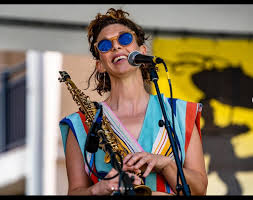
Aurora Nealand is a multi-instrumentalist — soprano and alto saxophone, clarinet, accordion, and voice — and the clarinet is the instrument that ties her to the traditional line. Raised in Pacifica, California, in a musical family, she studied composition at Oberlin Conservatory and physical theatre at the Jacques Lecoq School in Paris, then rode a bicycle across the country gathering audio interviews from rural Americans for a piece called "American Dreams." The trip ended in New Orleans, her home since 2005, where she learned the city's traditional jazz in real time — sitting in with the Panorama Jazz Band, VaVaVoom, and the New Orleans Moonshiners.
She formed The Royal Roses, her own traditional jazz band, and their debut was a live tribute to Sidney Bechet recorded at Preservation Hall — a statement of intent, since the band draws its repertoire heavily from Bechet, Django Reinhardt, and traditional New Orleans jazz. The Roses also carry a lot of Caribbean influence, something Nealand often makes a point of onstage. DownBeat has named her a rising star on soprano saxophone and, later, on clarinet. The Roses won the Big Easy Award for Best Traditional Jazz Band in 2015 and 2017, and she was voted Best Female Performer in the 2016 Gambit awards. She also performs with pianist Tom McDermott, usually at Buffa's. Beyond the traditional band she leads the Monocle, her solo project of original compositions and installation work — KindHumanKind, a fully staged ninety-minute show, debuted at the Contemporary Arts Center in 2019 — and fronts the rockabilly outfit Rory Danger and the Danger Dangers. She has appeared as herself in HBO's Treme and played Lincoln Center, the Kennedy Center, and Jazz Fest.
Start with: Live at Preservation Hall: A Tribute to Sidney Bechet (2011); The LookBack Transmission (2014); Comeback Children (2016); KindHumanKind (as The Monocle, 2019).
Watch: "Bloody Sunday Sessions" (Aurora Nealand & The Royal Roses, filmed 2013 — Nealand on clarinet and vocals) — https://www.youtube.com/watch?v=O9c3qgtn4Mw · "Comes Love" with Tom McDermott at Buffa's — https://www.youtube.com/watch?v=glLxJQZTeaU
A first listening path
If you want five records, in order:
- Sidney Bechet, "Petite Fleur" (1952) — the vocal vibrato, at its most famous.
- George Lewis, "Burgundy Street Blues" — the revival sound, improvised at a bedside.
- Pete Fountain, "Just a Closer Walk With Thee" — the singing Dixieland tone.
- Dr. Michael White, Blue Crescent (2008) — the tradition, carried through the flood.
- Charlie Gabriel, 89 (2022) — the living link, a first solo album after seven decades.
Then go hear it live — a Preservation Hall night, a Frenchmen Street set, a Royal Street corner. That's where this music still lives.
Who's not here (yet)
Eight names a clarinet guide ought to include are missing, and the reason is stated plainly: Evan Christopher, Johnny Dodds, Jimmie Noone, Alphonse Picou, Barney Bigard, Edmond Hall, Leon Roppolo, and Omer Simeon have no nolamusic.net pages yet, so they are not entries here. Evan Christopher is the biggest hole in the clarinet line as it stands. The guide grows as the pages do — and when those players get pages, they get entries.
More in this series
Introduction to New Orleans Music — six guides to the sounds that built the city. Piano · Trumpet · Trombone · Clarinet · Drums · Singer/Songwriters. See all six guides →