New Orleans trombone starts as the tailgate and becomes the frontman. The name comes from the wagon days: the trombonist sat at the back of the wagon or parade trailer to have room to work the slide, and that back-of-the-band seat gave the style its name. In the early ensemble the trombone answered underneath the trumpet and clarinet, outlining chords like a bass or playing a countermelody to the cornet, with glissandos and raucous slide effects as its most striking feature. Then, over a century, the trombone moved forward — to the front of the brass band, to the front of the funk band, to the front of the stage.
The point of this guide is simple: hear the music, and if it grabs you, buy it. Every entry below leads with Listen & Buy links — the artist's nolamusic.net page, where the Listen bar carries Spotify and Apple Music, plus Louisiana Music Factory, Euclid Records, and Amazon for buying. The prose is the invitation; the links are the purpose.
What follows is an introduction, not an encyclopedia: the sound itself, the line of players who made it, and the living musicians still carrying it. Every artist below has a page on nolamusic.net, linked at the top of each entry.
What it sounds like
Six things to listen for. Once you hear them, you'll recognize the style anywhere.
Tailgate: the trombone answers underneath. In the early ensemble the trombone filled in beneath the trumpet and clarinet, sometimes outlining chords like a tuba or bass, more often playing a countermelody to the cornet. Hear it in Kid Ory's "Ory's Creole Trombone" (1922) — the slide let him play glissando and "smear" between notes, giving his music what Smithsonian calls the boozy sound still associated with New Orleans jazz.
The slide as a vocal instrument: glissandi, smears, growls, blue notes. Unlike valved brass, the trombone slide is not stopped or notched on a fixed pitch, so the sliding note is the instrument's characteristic sound. Because blue notes are moving targets, the most blues-oriented early players produced a vocal blues tonality close to the great blues singers of the day. Ory attacked his notes percussively and used glissandos, growls, and smears, with a large rough tone. Hear it in his solo on "When the Saints Go Marching In," transcribed as a textbook of his glissandos, growls, and fast vibrato.
The street and parade engine. In street and second-line contexts the trombone is a rhythmic engine, not just a harmony voice. The modern version is explicit in Corey Henry's own material: his single "Footwork" was released as a song that brought the rhythm of Tremé to life in a second-line groove. Hear it there, and in every brass band working a parade route today.
The funk frontman: trombone out front, singing, second-lining, MC-ing. Big Sam, ex-Dirty Dozen trombonist, blows the funk out of his trombone and refuses to let the audience sit still — between solos and trombone riffs he second-lines and works the crowd in call-and-response, MC-style. Corey Henry is likewise billed as trombonist, vocalist, front man, and producer. Trombone Shorty extends the same lineage as the trombone-fronted bandleader. Hear it in Big Sam's Funky Nation, "Coffee Pot."
The trombone summit: multiple trombones as the whole front line. Bonerama, formed in 1998 by trombonists Mark Mullins and Craig Klein, puts the low brass on top, with a three-trombone front line plus a sousaphone standing in for electric bass. It is the brass-band concept pushed past the traditional single-tailgate role. Hear it in Bonerama's classic-rock covers with a New Orleans brass-band twist.
The living-tradition carrier: today's players study the old tailgate masters. Haruka Kikuchi is the cleanest current example: Craig Klein calls her a "Frog" Joseph disciple, and Kikuchi herself traces her playing to hearing Waldren "Frog" Joseph in high school. Hear it in Kikuchi with the Shake 'Em Up Jazz Band, "Salty Dog."
The founder
Kid Ory (1886–1973)
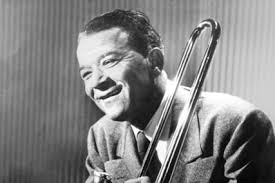
Edward "Kid" Ory is where this guide starts because he is where the trombone's job in jazz starts. Born December 25, 1886, in LaPlace, Louisiana, on Woodland Plantation, to a Louisiana French-speaking Black Creole family, he was leading one of the best-known bands in New Orleans by the early 1910s, with a slide trombone that became defining to his sound. He codified, by precept, the trombone's role in classic three-part contrapuntal jazz improvisation, and helped popularize the trombone glissando, a central element of New Orleans jazz. Louis Armstrong, who replaced Oliver in Ory's band, said in a 1970 interview: "Kid Ory's band would cut all of the bands during his tailgate advertising."
In 1922 in Los Angeles, Ory's Sunshine Orchestra cut "Ory's Creole Trombone" and "Society Blues" for Nordskog — he was the leader of the first Black New Orleans jazz band to make a recording. He was in the original lineup of Louis Armstrong's Hot Five, first recorded November 12, 1925, and his "Muskrat Ramble" was in the Hot Five session of February 1926. The 1940s revival brought him back: Orson Welles hired him to lead the band on his CBS radio show in 1944, and the Crescent Records sessions followed that August. He kept performing in Los Angeles clubs until retiring in 1966, made a final New Orleans visit to perform at the second Jazz Fest in 1971, and died of pneumonia in Honolulu in 1973. No verified playable clips were found for Ory — use the Listen bar on his artist page.
Start with: Kid Ory's Creole Jazz Band 1954 (Good Time Jazz, recorded August 1954, Hollywood); Tailgate! (1944–45 sessions); The Complete Kid Ory Verve Sessions (late-1950s sides, recorded when Ory was in his early 70s).
The street line
Corey Henry (b. July 1975)
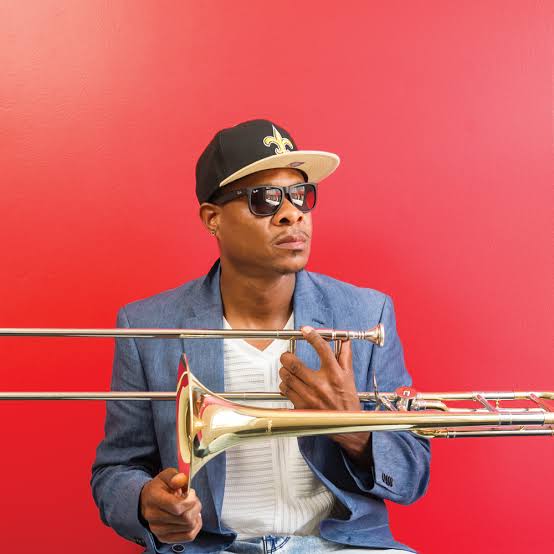
Corey Henry is Tremé's trombone, and he will tell you so himself: "Being in Tremé was my biggest inspiration, being around all that music at once." Born in July 1975 and raised on Barracks Street, just down from the Little People's Club, once a popular second-line parade stop, he started on snare drum and switched to trombone at age 10. At 16 his uncle Benny Jones Sr., founder of the Treme Brass Band, hired him: "He just threw me in the mix with all those bad musicians, said 'This is how you gon' learn. Just go for it.'" He eventually inherited Kermit Ruffins' weekly Thursday-night residency at Vaughan's Lounge on Dauphine Street, which he still holds.
He founded the Lil Rascals Brass Band in the late 1990s, played trombone on Rebirth Brass Band's Rebirth of New Orleans (Grammy winner, 2012), joined the funk supergroup Galactic, and formed the Treme Funktet in 2011. Live at Vaughan's arrived April 25, 2025, on Louisiana Red Hot Records, and was nominated for Best Regional Roots Music Album at the 2026 Grammys — nominee, not winner. His single "My City" followed on May 22, 2026, and he holds a Monday-night d.b.a. residency, "Red Beans & Ricely Yours," running through November 2026. As he puts it: "I invite anyone coming to town to pass by Vaughan's. Everyone's welcome to the funkiest party in New Orleans, it's Thursday Night Live down here."
Start with: Lapeitah (Treme Funktet, 2016, national debut); Live at Vaughan's (2025); "Footwork" (single, 2023).
Watch: "My City" (2026) — https://www.youtube.com/watch?v=7xv7F9BJoHA · NOLA Footwork Festival 2025 — https://www.youtube.com/watch?v=mfci_GxHhPQ
Big Sam — Sammie "Big Sam" Williams
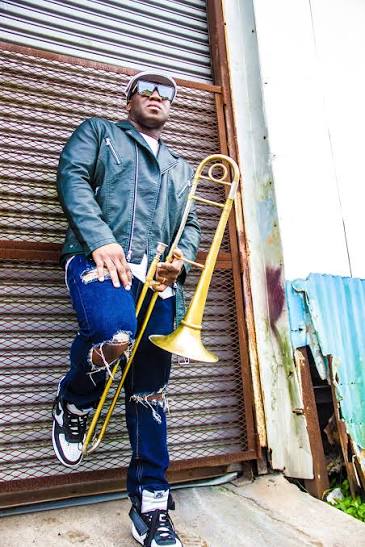
Big Sam is the funk frontman of this guide, and he got there the way a lot of New Orleans musicians do: by default. Raised in the uptown Twelfth Ward and New Orleans East, he ended up in the school marching band when basketball didn't work out, and the only instrument available was the trombone. His teachers included Darrell Dickerson, Kidd Jordan, and, at NOCCA, Clyde Kerr. While still in high school he founded the Stooges Brass Band; the Dirty Dozen Brass Band called him up at age 19, and he toured the world with the Dozen, some 300 shows a year for over three years, playing alongside James Brown, Widespread Panic, and Karl Denson. His great-grandfather, WWOZ notes, is jazz legend Buddy Bolden.
He first assembled the Funky Nation as a side project, then as a full-time band after he left the Dozen, writing much of his own material from funk, jazz, hip-hop, and blues. The band's brand is "Noladelic Powerfunk," and its festivals run from Bonnaroo and Austin City Limits to Jazz Fest and South by Southwest. He recorded and toured with Allen Toussaint and Elvis Costello on their 2006 River in Reverse, and had a recurring role in HBO's Treme. As he puts it: "We're full of funk and rock and high energy. We try to bring the party every time." No new album was verified for 2025–26.
Start with: Birth of a Nation (2003, debut); King of the Party (2010, breakout); Evolution (2014); Songs in the Key of Funk, Vol. 1 (2018).
Watch: "Coffee Pot" (from Evolution) — https://www.youtube.com/watch?v=IiCt7uuH8X0 · Jam in the Van, full set live in New Orleans (2022) — https://www.youtube.com/watch?v=LCuczl3qqLI · "Peace, Love & Understanding" — https://www.youtube.com/watch?v=DEydt5UoVhY
Glen David Andrews

Glen David Andrews was born in Tremé into a musical family — brother Derrick Tabb on snare drum with the Rebirth Brass Band, cousin Troy "Trombone Shorty" Andrews — and learned the brass-band tradition first-hand from Anthony "Tuba Fats" Lacen. He started on bass drum as a child, picked up trombone, was playing a joyful noise by age 12, and played with the New Birth, Lil' Rascals, Tremé, and Rebirth brass bands. He is a trombonist, vocalist, and bandleader fusing jazz, gospel, funk, R&B, soul, and brass-band music, a long-time Frenchmen Street and d.b.a. presence, and he appeared in HBO's Treme and later in CBS's NCIS: New Orleans. As he puts it: "The musicians I heard coming up literally brought me out of the womb. Jesus was born in a manger. I was born in a second line."
Walking Through Heaven's Gate, recorded live at Zion Hill Baptist Church with a full choir, appeared on the Grammy nominating ballot for Best Traditional Gospel Album but was never nominated. Redemption (2014), produced by Leo Sacks and recorded to 24-track analog tape at The Living Room in Algiers, frames his own recovery alongside New Orleans' post-Katrina recovery. In his own words: "Redemption is about my journey back from the living dead." Portrait of the Treme Prince followed in 2019. No new album was verified for 2025–26.
Start with: Redemption (2014); Walking Through Heaven's Gate (recorded live at Zion Hill Baptist Church, released 2008–09); Portrait of the Treme Prince (2019).
Watch: "Letter From The Porch" — https://www.youtube.com/watch?v=jE4kG2FKYow · "A Day in the Life of a Fool" (live from Esplanade Studios) — https://www.youtube.com/watch?v=fH7CTetZVCg · "Late Night Trippin" (with Uncle Mo) — https://www.youtube.com/watch?v=jmf0VV_kb70
Trombone Shorty — Troy Andrews (b. 1986)
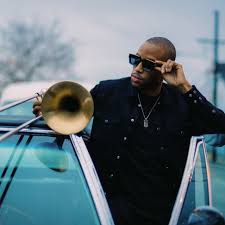
He plays trumpet as well as trombone, sings, and plays keyboards, drums, and percussion on record — but his stage name, brand, and page are trombone-led, and trombone is the instrument he leads with. Born Troy Andrews on January 2, 1986, in Tremé, he got the nickname because the trombone was bigger than he was as a small child marching in Tremé brass bands. He made his first Jazz Fest appearance at age four with Bo Diddley, led his own brass band at six, and toured with Lenny Kravitz at 13. His brother is trumpeter James Andrews, and his grandfather was Jessie Hill of "Ooh Poo Pah Doo." The sound he calls "Supafunkrock" is jazz, funk, rock, hip-hop, and R&B rooted in Tremé brass-band tradition, fronted by Trombone Shorty & Orleans Avenue.
Backatown (2010) reached No. 1 on the Billboard Contemporary Jazz chart for nine consecutive weeks. He took over the Jazz Fest closing set in 2013, in the Neville Brothers' legacy spot, and closed it for the 11th consecutive year in 2025. The Trombone Shorty Foundation, founded in 2011, supports youth music education, with the annual Shorty Fest benefit at Tipitina's during Jazz Fest. He is a Grammy winner as a featured artist on Jon Batiste's We Are and a multiple-time nominee, most recently for Second Line Sunday (2026), the album with the New Breed Brass Band led by his nephew Jenard Andrews, released August 29, 2025 — exactly 20 years after Hurricane Katrina — and dedicated to his late mother Lois Andrews. Of Lifted (Blue Note, 2022) he said: "I think Lifted is the closest we've ever gotten to bottling up the live show and putting it on a record."
Start with: Backatown (2010); Lifted (2022); Second Line Sunday (2025, with New Breed Brass Band).
Watch: "Lifted" (The Late Show with Stephen Colbert) — https://www.youtube.com/watch?v=glQ4bzfywBQ · "Lifted," Jazz Fest, May 3, 2026 (title-only listing) — https://www.youtube.com/watch?v=49r95F5ks1o
The modern composer, bandleader, and educator
Delfeayo Marsalis (b. 1965)
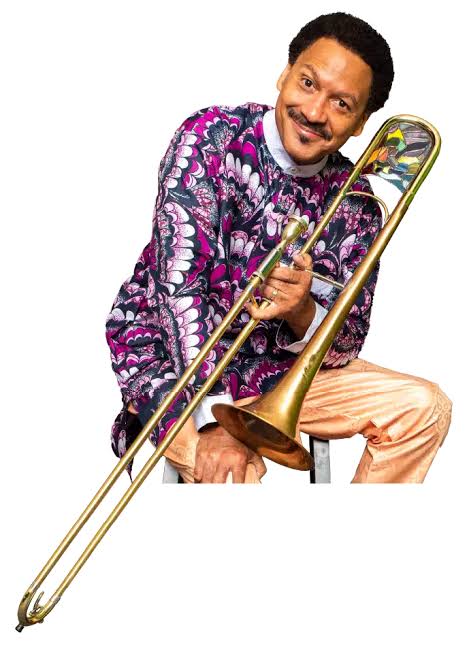
Delfeayo Marsalis is a trombonist, bandleader, and producer, and the Uptown Jazz Orchestra is his band. Born July 28, 1965, in New Orleans, son of pianist and educator Ellis Marsalis Jr. and brother of Wynton, Branford, and Jason, he began playing trombone at 13 and produced his first recording at 17, for his father. As a producer he has more than 120 recordings to his name, including work for Harry Connick Jr., Spike Lee, Terence Blanchard, and the Preservation Hall Jazz Band, and he won a Grammy as producer on brother Branford's 1992 I Heard You Twice the First Time — a producer win, not a trombone-performance win. His NEA Jazz Masters honor in 2011 came jointly with his father and brothers, the first group NEA Jazz Masters award.
As a trombonist he names J. J. Johnson most of all among his influences, plays more in the lower and middle register, and aims for a smooth, connected ballad sound. As he puts it: "Trombones generally sit in the middle of the jazz band. They keep the trumpets and saxes away from each other. There's always that love and hate relationship between them. The trombone is the peacekeeper." The Uptown Jazz Orchestra, up to 18 musicians, formed in 2007–08 with a mission of riff-playing, spontaneous arrangements, and collective New Orleans polyphony, and holds a long Wednesday-night Snug Harbor residency. He founded Uptown Music Theatre in 2000 for youth musical-theatre training, and since 2021 UJO has produced the annual Jazz at Congo Square Festival. His philosophy, on Crescent City Jewels: "Our philosophy is to take the important ingredients from past generations and use them in the gumbo that we're creating today."
Start with: Crescent City Jewels (2024, UJO); Jazz Party (2020, UJO); The Last Southern Gentlemen (2014, with father Ellis Marsalis).
Watch: Uptown Jazz Orchestra, New Trier Jazz Festival, 2018 — https://www.youtube.com/watch?v=RH9GC9fcyiw
Jeff Albert
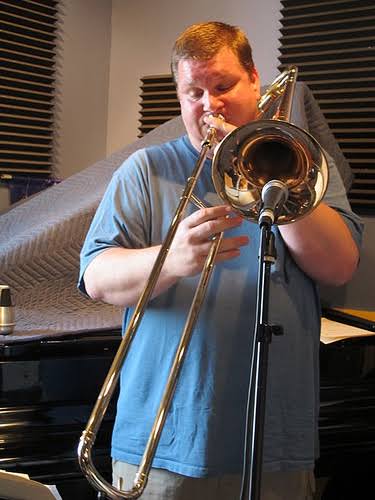
Jeff Albert is the trombone's double life: improviser and working professional in one player. He is a trombonist, improviser, music technologist, and educator who performs on trombone, bass trombone, bass trumpet, and laptop. Lafayette-raised — not New Orleans-raised, despite one alumni piece saying so — he played his first paying trombone gigs while still in high school in Lafayette in the 1980s, moved to New Orleans in 1988, and was an active scene member until moving to Atlanta in 2023, where he is now on the Georgia Tech School of Music faculty. His degrees run Loyola New Orleans (B.M. 1993), University of New Orleans (M.M. 2000, studying with Ellis Marsalis, Harold Battiste, Ed Petersen, and Steve Masakowski), and LSU (Ph.D. 2013, the first graduate of its Experimental Music & Digital Media program).
He has been one of George Porter Jr.'s Runnin' Pardners since 2003 and was horn arranger and trombonist for The Meters from 2015 until their final performance in 2017. He wrote the horn parts and played trombone on Bobby Rush's Porcupine Meat, winner of the 2017 Grammy for Best Traditional Blues Album, and performed on a track with U2, recording alongside Bono and the Edge. He has been named a DownBeat Critics Poll Rising Star trombonist repeatedly from 2011 onward, and earned a 2014 Grammy nomination for Best Dance/Electronica Album as trombone soloist on Pretty Lights' Color Map of the Sun. In his own framing he lives a "double life": improviser and creative musician drawing on the jazz tradition, and working professional playing just about any type of music that uses trombone or bass trombone. And he still comes home: he is in the house band for "A Tribute To Louis Prima and Lee Dorsey" at Tipitina's on Wednesday, November 25, 2026.
Start with: Unanimous Sources (2020, a Boston Globe top-10 album of 2020); The Tree on the Mound (Instigation Quartet, 2014); One (2005).
Watch: "Unit of Resistance" (from Unanimous Sources) — https://www.youtube.com/watch?v=MOrthpOEk6c
John Mahoney
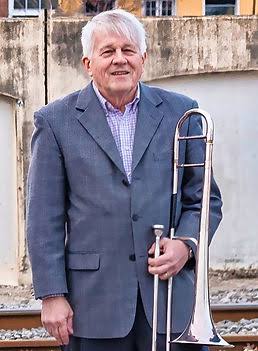
John Mahoney is genuinely dual trombone and piano. His own site headlines him jazz arranger, trombonist, pianist, and band leader, and his Little Band page lists him as "Leader | Trombone" — trombone is his bandleader instrument, piano his other voice. A native of upstate New York, he took a B.S. in Music Education from SUNY Potsdam and an M.M. in Jazz and Contemporary Media from the Eastman School of Music, and came to Loyola in 1978, where he is now retired Coordinator of Instrumental Music and Jazz Studies and Professor Emeritus, still teaching adjunct trombone. He is the trombonist on Matt Lemmler's Portrait of Wonder and the pianist and composer-arranger on the Al Belletto Big Jazz Band's Jazznocracy.
He leads the 18-piece John Mahoney Big Band, organized in 1992, and the John Mahoney Little Band septet, which plays every Monday evening aboard the Steamboat Natchez. The Big Band has played Snug Harbor, Jazz Fest, the Loyola Jazz Festival, and the Jazz Education Network conference, and his big-band arrangements have been performed and recorded by musicians including J. J. Johnson, Brian Blade, Evan Christopher, and Wycliffe Gordon. As Tony García wrote after jamming with him in 2026: "One of the most lyrical trombonists I've ever heard." No verified playable clips were found for Mahoney — use the Listen bar on his artist page.
Start with: In From Somewhere (Big Band, 2001 — ten Mahoney compositions, eighteen New Orleans-area musicians); Christmas Joy (Big Band, 2009).
The living tradition
Charlie Halloran
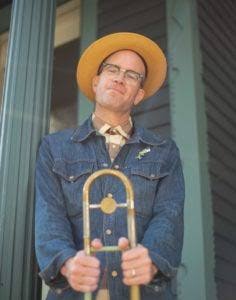
Charlie Halloran is a central figure in the post-Katrina traditional jazz revival — a St. Louis native with a master's degree in trombone from the Eastman School of Music who arrived in New Orleans in the late 2000s, joined the Squirrel Nut Zippers in 2009, and seems to be everywhere at once in the city, a fixture of the Frenchmen Street scene. He is a go-to sideman for the Shotgun Jazz Band, Panorama Jazz Band, Meschiya Lake & the Little Big Horns, Palmetto Bug Stompers, Tuba Skinny, and the Preservation Hall All-Stars, and he recorded on Jon Cleary's Grammy-winning Go Go Juice and its follow-up Dynamite, and on Maria Muldaur's Grammy-nominated Don't You Feel My Leg. He is a two-time DownBeat Rising Star (2013 and 2017 per nolamusic.net) and an OffBeat Best Trombonist in 2014 and 2016.
As a leader he fronts the Tropicales, his 1960s-style Caribbean lounge band playing calypso, beguine, 1950s R&B, and trad jazz. Cé Biguine! (2017) was recorded straight to 78-rpm acetate disc on St. Claude Avenue — as he puts it: "I made this record directly to 78rpm acetate disc on St. Claude Ave in New Orleans. So no editing, no mixing, no extended solos. I really wanted it to sound like an album from before the extended play era, recorded in a live room." The Alcoa Sessions (2022) imagines a working New Orleans band aboard Alcoa Steamship Co. cruises out of New Orleans, 1949–1959. His newest, New Orleans '26, arrived August 28, 2026, on Well Kept Secret.
Start with: Cé Biguine! (2017); The Alcoa Sessions (2022); New Orleans '26 (2026).
Watch: "Take Her to Jamaica" (French Quarter Festival, 2022) — https://www.youtube.com/watch?v=LRl8NEO4UDM
Katja Toivola (b. 1975)
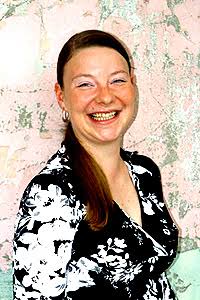
Katja Toivola is a Finnish trombonist and the first woman trombonist to hold a regular chair at Preservation Hall. Born in Helsinki, she first visited New Orleans in 1995, has lived there since 2004, and divides her time between Helsinki and New Orleans. She discovered traditional jazz at a Helsinki festival in the early 1990s, picked up trombone at a music camp, and wrote her University of Helsinki master's thesis on the Rebirth Brass Band. She has played at Preservation Hall since 2006, leads two bands both founded in 2001 — the New Orleans Helsinki Connection and the Spirit of New Orleans — and is the partner of trumpeter Leroy Jones, in whose band she plays at the Hall. She appeared in HBO's Treme, season 2.
She is also a composer: "Paradise on Earth," about the post-Katrina evacuation, carries her own verdict on the city, reported secondhand by Leroy Jones: "If there is any place that I want to live in the USA, it's New Orleans and nowhere else. It's a 'Paradise on Earth.'" A May 2026 Lonely Planet guide singles her out at Preservation Hall: "the set's sole female trombonist, Katja Toivola, jolts you to your feet." No new album was verified for 2025–26.
Start with: Paradise On Earth (New Orleans Helsinki Connection, 2012); Some of These Days (Spirit of New Orleans, 2006); Leroy Jones & Katja Toivola, Vol. II (2018).
Watch: "Honeysuckle Rose" (New Orleans Helsinki Connection, live at the Old Mint, June 1, 2013) — https://www.youtube.com/watch?v=FX5gxT38nrQ
Haruka Kikuchi
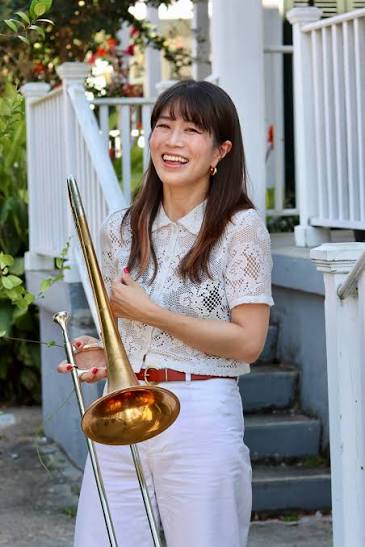
Haruka Kikuchi is known as the "Queen of Tailgate" because she continues the tailgate style of trombone, a New Orleans jazz tradition — and she came to it from Tokyo. Born in Tokyo and raised in Chiba Prefecture, she played piano and violin as a child and picked up trombone at 15 after hearing an Original Dixieland Jazz Band recording. She moved to New Orleans in 2014 and is now a trad-jazz fixture with the Preservation Hall All-Stars and Kermit Ruffins, and plays with the Shake 'Em Up Jazz Band, the Shotgun Jazz Band, and the Original Tuxedo Jazz Band. WWOZ calls her "one of the city's most dynamic horn players, engaging audiences with her musicality, stage presence, and expertise on the slide trombone."
She played on Cha Wa's SpyBoy, nominated for Best Regional Roots Music Album at the 61st Grammy Awards, and since 2016 she has produced the Japan: New Orleans Collection series, recording visiting Japanese musicians in New Orleans studios with local players. The newest volume, Vol. 17, arrived April 17, 2025. Craig Klein calls her a "Frog" Joseph disciple — "She's focusing on New Orleans music and being true to it. She's done her homework, she's very studied… she knows the music and she plays it right" — and Kikuchi herself traces it to hearing Waldren "Frog" Joseph in high school: "The very first time I heard him (in high school), it was so joyous, I just wanted to dance."
Start with: Japan: New Orleans Collection Series Vol. 17 (2025); SpyBoy (Cha Wa, as contributing trombonist).
Watch: "Salty Dog" (Shake 'Em Up Jazz Band, Fest Jazz, 2018) — https://www.youtube.com/watch?v=fBhAIZqTKaE · "Washboard Wiggles" (Pleyben, France, 2019) — https://www.youtube.com/watch?v=LVOT8OBHMhc
Stephen Walker
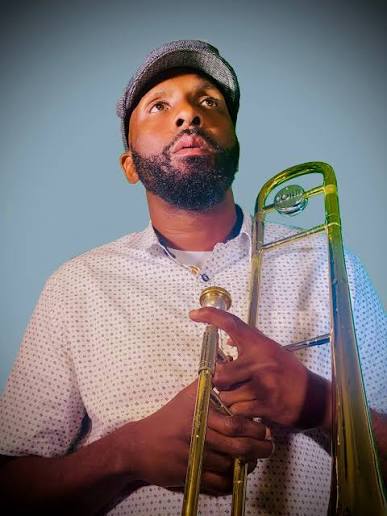
Stephen Walker closes this guide the way Ory opened it: with the tailgate, played by someone born to it. Born and raised in New Orleans, he began music at age five in his preacher father's church, where children were encouraged to play during services. Piano, clarinet, and trumpet came first, then trombone at age twelve. He studied at NOCCA, was mentored by Delfeayo Marsalis, and toured internationally as a teenager with Irvin Mayfield. He has shared stages with Harry Connick Jr., Branford Marsalis, Nicholas Payton, Kermit Ruffins, Trombone Shorty, Davell Crawford, Deacon John, Doreen Ketchens, Shannon Powell, James Andrews, and Herlin Riley, and he plays Preservation Hall, Snug Harbor, the Blue Nile, d.b.a., the Spotted Cat, and Mahogany Jazz Hall, leading Stephen Walker N'Em.
His debut album Midnight Cocktails arrived in 2023, and OffBeat's Geraldine Wyckoff wrote that he "really shines in his varied roles as a trombonist, composer and arranger," adding of the title cut: "Tonally, his trombone is silky sweet, his arrangement perfection." Swinging in New Orleans: The Trad Jazz Session, Vol. 1, co-led with bassist Chisoo Kim, arrived May 7, 2026, with a release show at Snug Harbor, and his "Blues Walker" was a 2026 NPR Tiny Desk Contest entry. As one profile puts it: "Whether it's traditional jazz, bebop, funk, Latin, second line, or contemporary jazz, his trombone tells the story of a city, a culture, and a man who was born to play."
Start with: Midnight Cocktails (2023); Swinging in New Orleans: The Trad Jazz Session, Vol. 1 (2026).
Watch: "Oh, Lady Be Good!" — https://www.youtube.com/watch?v=fkhZX5CHPi0 · "Blues Walker" (NPR Tiny Desk Contest, 2026) — https://www.youtube.com/watch?v=K5443KZFD_c
A first listening path
If you want five records, in order:
- Kid Ory, "Ory's Creole Trombone" (1922) — the tailgate itself.
- Corey Henry, Live at Vaughan's (2025) — the street line, right now.
- Big Sam, "Coffee Pot" (from Evolution, 2014) — the funk frontman.
- Trombone Shorty, Lifted (2022) — the frontman at full stretch.
- Stephen Walker, Midnight Cocktails (2023) — the line, right now, played by someone born to it.
Then go hear it live — a second line, a Frenchmen Street set, a Preservation Hall night. That's where this music still lives.
Who's not here (yet)
Eight names a trombone guide ought to include are missing, and the reason is stated plainly: Lucien Barbarin, Freddie Lonzo, Craig Klein, Mark Mullins, Honoré Dutrey, Jim Robinson, Waldren "Frog" Joseph, and Ronell Johnson have no nolamusic.net pages yet, so they are not entries here. Lucien Barbarin is the biggest hole in the trombone line as it stands. Bonerama has a band page, but Mullins and Klein individually do not. The guide grows as the pages do — and when those players get pages, they get entries.
More in this series
Introduction to New Orleans Music — six guides to the sounds that built the city. Piano · Trumpet · Trombone · Clarinet · Drums · Singer/Songwriters. See all six guides →