New Orleans trumpet starts as a cornet story and becomes the story of the jazz soloist. In the early ensemble the cornet carried the melody while the clarinet wove above and the trombone answered below — three improvised lines at once, no single voice rising above the group. Then one player after another stepped forward out of that ensemble, until the trumpet was the music's leading voice outright. This guide traces that line, from the man no one ever heard play to the players carrying it now.
The point of this guide is simple: hear the music, and if it grabs you, buy it. Every entry below leads with Listen & Buy links — the artist's nolamusic.net page, where the Listen bar carries Spotify and Apple Music, plus Louisiana Music Factory, Euclid Records, and Amazon for buying. The prose is the invitation; the links are the purpose.
What follows is an introduction, not an encyclopedia: the sound itself, the line of players who made it, and the living musicians still carrying it. Every artist below has a page on nolamusic.net, linked at the top of each entry.
What it sounds like
Five things to listen for. Once you hear them, you'll recognize the style anywhere.
The lead voice in collective improvisation. In the early New Orleans ensemble, the cornet carried the melody while clarinet wove above and trombone answered below. King Oliver's Creole Jazz Band was, in Britannica's phrase, "the apex of the early, contrapuntal New Orleans ensemble style." Hear it in "Dippermouth Blues" (1923), with 21-year-old Louis Armstrong on second cornet.
The "talking" horn: mutes, growls, and bent notes. Oliver was a master at bending notes and one of the first players expert with plunger mutes, making wa-wa sounds and even imitating a baby crying. Hear it in his three-chorus muted solo on "Dippermouth Blues," played with a Conn metal mute for the "wha wha" effect.
The virtuoso soloist breaks out of the ensemble. Armstrong's Hot Five and Hot Seven recordings (1925–28) are where the emphasis on collective improvisation gives way to his strength as a soloist, and by "West End Blues" (1928) he had established the preeminence of the virtuoso soloist in jazz. Hear it in the unaccompanied opening cadenza of "West End Blues" — the moment Gunther Schuller said made it clear jazz could compete with the highest order of musical expression.
The street and parade lead. The trumpet still leads the brass band on the street — loud, blues-drenched, built to carry over a crowd and a second line. Buddy Bolden's horn was said to be heard miles away. Kermit Ruffins carries that same job today.
The composer's horn. The modern end of the line writes with the trumpet rather than just playing it: Nicholas Payton's Black American Music concept, Terence Blanchard's film scores and operas. Hear it in Blanchard's A Tale of God's Will (2007) and Payton's Triune (2025).
The founders
Buddy Bolden (1877–1931)
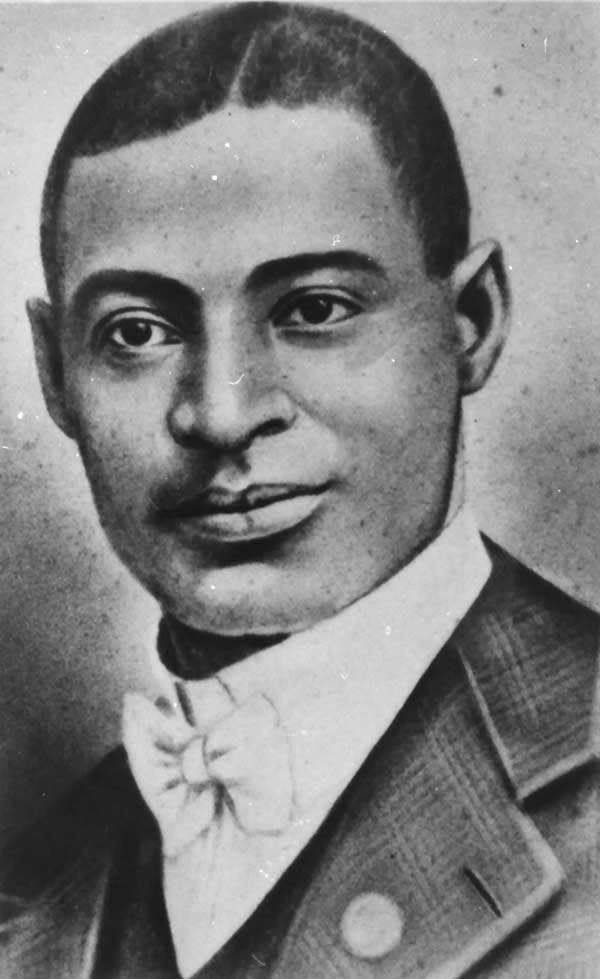
Every lineage needs a first king, and Bolden is this one — with a catch no other entry in this guide has. There are no recordings of Buddy Bolden. None exist, and none ever will: the National Park Service states flatly that there was never a recording made of him, so we will never know exactly how he sounded. Everything else in this entry is what the people who heard him said, and what came after him.
From around 1898 until 1906, Bolden, in the Park Service's words, "reigned as the undisputed King of black New Orleans music," and his band is generally considered the first group to play what would later be called jazz. He played uptown dance halls — Funky Butt Hall, Johnson and Lincoln Parks — with a sound described as "the guttural moan of the blues, mixed with the spirit of the black Baptist church, and applied a 'ragged' rhythmic feel." His signature call was blasting his horn from Johnson Park to "call his children home" to Lincoln Park, drawing dancers away from rival orchestras. His theme song was "Buddy Bolden's Blues" — "Funky Butt, Funky Butt, take it away."
He collapsed while performing in a street parade in 1906 and was committed in the spring of 1907 to the state sanitarium at Jackson, Louisiana, where he remained until his death in 1931. He is buried at Holt Cemetery in New Orleans. The closest listening to Bolden himself is Jelly Roll Morton's 1939 recording of "Buddy Bolden's Blues" — a tribute by a man who heard him, not Bolden's own playing, and it should never be presented as anything else. The honest buy is a book: Donald M. Marquis's In Search of Buddy Bolden.
Start with: Jelly Roll Morton, "Buddy Bolden's Blues" (1939, a tribute — not Bolden himself); Donald M. Marquis, In Search of Buddy Bolden (book).
King Oliver (1881–1938)
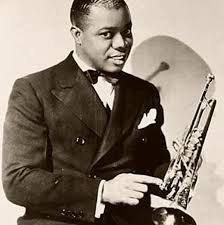
If Bolden is the king no one heard, Joseph Nathan "King" Oliver is the king everyone learned from. He was Louis Armstrong's mentor and teacher — Armstrong called him "Papa Joe" — taught the young Louis in New Orleans, gave him his job in Kid Ory's band when Oliver left for Chicago, and then summoned him to Chicago to play second cornet. Armstrong later wrote, "It was my ambition to play as he did. I still think that if it had not been for Joe Oliver, Jazz would not be what it is today. He was a creator in his own right."
In 1922 Oliver's Creole Jazz Band was playing the Royal Gardens cabaret in Chicago, later renamed Lincoln Gardens, with Oliver on first cornet, Armstrong on second, Johnny Dodds on clarinet, Honoré Dutrey on trombone, Lil Hardin on piano, Bill Johnson on bass and banjo, and Warren "Baby" Dodds on drums. In April 1923 the band cut its Gennett sessions in Richmond, Indiana — "Dippermouth Blues," "Canal Street Blues," "Snake Rag" among them — and recorded 37 performances that year in total, setting the permanent standard for ensemble-oriented New Orleans jazz. Oliver was the mute pioneer: plunger mutes, derby hats, bottles, cups, bending notes into speech.
Armstrong left in June 1924 for Fletcher Henderson's orchestra. Lincoln Gardens burned on Christmas Eve 1924 and the Creole Jazz Band disbanded. Oliver led the Dixie Syncopators from 1925, but gum disease made playing steadily harder, and by 1935 he could no longer play trumpet at all. He moved to Savannah, Georgia, in 1936, ran a fruit stand and worked as a pool-hall janitor, bankrupt and nearly forgotten. He died there in 1938 and is buried at Woodlawn Cemetery in New York, with Armstrong among the musicians who attended.
Start with: "Dippermouth Blues" (Creole Jazz Band, Gennett, April 6, 1923); "Canal Street Blues" (April 5, 1923).
Watch: "Dippermouth Blues" — https://www.youtube.com/watch?v=BEF9QeHxrYw · "Canal Street Blues" — https://www.youtube.com/watch?v=dPZX7ZsTOdY
Louis Armstrong (1901–1971)
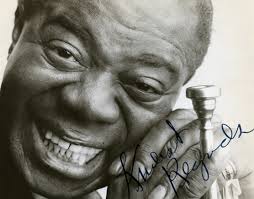
Armstrong is the hinge of this whole guide: the man who learned the ensemble style from Oliver and then broke out of it so completely that jazz reorganized itself around the soloist. Born in New Orleans in 1901 and raised in dire poverty, he learned cornet in the band at the Colored Waifs Home, where teacher Peter Davis taught him cornet and to read music. In his teens he learned from Oliver, became skillful enough to replace him in Kid Ory's band about 1918, and in 1922 Oliver sent for him in Chicago to play second cornet in the Creole Jazz Band.
In 1924 he joined Fletcher Henderson's Orchestra in New York; the following year he switched from cornet to trumpet and began recording under his own name with the Hot Five and Hot Seven ensembles. Those 1925–28 recordings — "Struttin' With Some Barbecue," "Potato Head Blues" with its famous stop-time solo chorus, "Cornet Chop Suey" — are cited as the ultimate examples of traditional, classic New Orleans jazz. And "West End Blues" (Hot Five, June 28, 1928), composed by Oliver, opens with an unaccompanied cadenza that announced the virtuoso soloist as the music's leading voice. He was also one of the first scat singers, improvising nonsense syllables in the manner of a horn.
After a successful small-group Town Hall concert in May 1947 he formed Louis Armstrong and the All Stars and performed with a small group for the remainder of his career. "What a Wonderful World," first released as a single in 1967, became his signature tune worldwide. Britannica's verdict: "His vibrant melodic phrasing, inventive harmonic improvisation, and swinging rhythmic conception established the vernacular of jazz music. His powerful tone, great range, and dazzling velocity set a new technical standard." Childhood nickname Satchelmouth, shortened to Satchmo; among musicians, "Pops" — as he was the father of it all.
Start with: "West End Blues" (Hot Five, 1928); "Potato Head Blues" (Hot Seven, 1927); "What a Wonderful World" (1967 single).
Watch: "West End Blues" — https://www.youtube.com/watch?v=W232OsTAMo8 · "Potato Head Blues" — https://www.youtube.com/watch?v=EfGZB78R7uw · "What a Wonderful World" (1970 spoken-intro version) — https://www.youtube.com/watch?v=2nGKqH26xlg
The traditional torch-bearers
Kermit Ruffins (b. 1964)
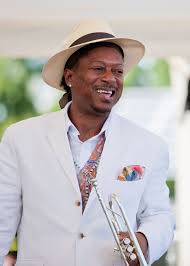
Kermit Ruffins is the Armstrong bridge made flesh — the player a general audience meets first, and the reason this guide puts him before the deeper Preservation Hall cut that follows. Born in New Orleans in 1964, he took up trumpet in junior high in the Ninth Ward and in 1983 was among the co-founders of the Rebirth Brass Band, modeled after the Dirty Dozen Brass Band. He left Rebirth and formed Kermit Ruffins & the Barbecue Swingers in 1992, combining music with barbecue — he is known for cooking barbecue for the whole crowd during his set — and recorded mostly on New Orleans-based Basin Street Records, where WWOZ counts 17 albums.
The Armstrong influence is central, not decorative: WWOZ calls him embodying "the exuberant spirit of Louis Armstrong," and AllMusic says he "reminds many people of a sort of modern-day Louis Armstrong," whom he first heard at 19. He appeared as himself in several episodes of HBO's Treme, took over Ernie K-Doe's Mother-in-Law Lounge after K-Doe's death, and is still closing the big rooms with the Armstrong tribute: on May 3, 2026, "Kermit Ruffins' Tribute to Louis Armstrong" closed Jazz Fest's final day in the Economy Hall Tent, and on August 2, 2026, the same tribute closed Satchmo SummerFest. His latest verified album is A Beautiful World (2017, with Irvin Mayfield); no newer album was verified, and none is claimed here.
Start with: 1533 St. Philip Street (Basin Street, 2001 — includes "Drop Me Off in New Orleans"); A Beautiful World (2017); World on a String (debut).
Watch: "Marie," live from Mother-in-Law Lounge (2015) — https://www.youtube.com/watch?v=E1gVOmRW4Bk · "Drop Me Off in New Orleans" (Jam in the Van) — https://www.youtube.com/watch?v=4WtmkES0X48
Wendell Brunious (b. 1954)
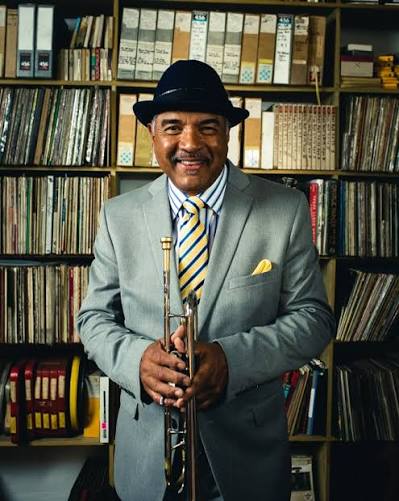
If Kermit is the public face of the tradition, Wendell Brunious is its library. Born in New Orleans on October 27, 1954, into a Louisiana Creole family, he is the son of trumpeter John "Picket" Brunious Sr., who studied at Juilliard and played with the Onward and Young Tuxedo Brass Bands and Paul Barbarin. Wendell began trumpet at age 11, studied at Southern University (where he played with Danny Barker), and was playing regularly at Preservation Hall with Kid Thomas Valentine by 1979; on Valentine's death in 1987 he became leader of the group. In 2023 he was named Preservation Hall's first-ever Musical Director, and he continues his decades-long tenure as bandleader at the St. Peter Street site, working with Ben Jaffe to identify new talent.
His father's rule is the best one-line summary of the traditional style in this guide: "If you don't know the melody, you don't know the song." Accepting the Musical Director post, Brunious said, "It is with great respect and passion that I accept this important position. Preservation Hall is the most important venue in the world for Traditional Jazz and I feel very privileged to have been asked to be its first Musical Director." Ben Jaffe's verdict: "He is a son of this sacred tradition and a library of information and knowledge." His debut as a leader, In the Tradition (GHB, 1986), pairs the 31-year-old Brunious with 82-year-old trombonist Louis Nelson, clarinetist Sammy Rimington, pianist Jeanette Kimball, bassist Frank Fields, and drummer Barry Martyn — the tradition handing itself down in one room.
Start with: In the Tradition (GHB, 1986); Down in Honky Tonk Town (1996); Mama Don't Allow It (GHB, 2003); Where Do You Start (with Tom Hook, 2017).
Watch: "In the Sweet Bye and Bye" (Preservation Hall Jazz Band, trumpet credit Wendell Brunious) — https://www.youtube.com/watch?v=nMsn3blkymw · "Going Back to New Orleans" (Tom Hook and Wendell Brunious) — https://www.youtube.com/watch?v=Q7In5t9E4rM
The modernists
Nicholas Payton (b. 1973)

Nicholas Payton is where the trumpet line stops being only a style and becomes an argument about what the music is. Born in New Orleans on September 26, 1973, the son of bassist Walter Payton and pianist and vocalist Maria Payton, he began trumpet at age four and was performing professionally at ten; before twenty he was in demand by Danny Barker, Clark Terry, Elvin Jones, and Marcus Roberts. He studied at NOCCA and the University of New Orleans, and his debut album as a leader, From This Moment (Verve, 1995), was followed by the Grammy-winning collaboration Doc Cheatham & Nicholas Payton (1997) — the award at album level for the Cheatham collaboration.
Payton coined Black American Music, or #BAM, to describe "the breadth of improvisational musical creations created by Black people in the U.S., regardless of genre," an idea the New York Times noted among the decade's definitive jazz moments in 2019. In his own words: "In Black music there are no fields, per se, there are territories and lineages." He often plays trumpet and keyboard simultaneously and has more than 20 recordings as a leader. The recent work keeps coming: Triune (Smoke Sessions, 2025, with Esperanza Spalding and Karriem Riggins) and A Supreme Blue with Butcher Brown (2026), a Coltrane and Davis centennial reimagining including Kind of Blue material.
Start with: From This Moment (Verve, 1995); Dear Louis (Verve, 2001 — an Armstrong homage); Triune (Smoke Sessions, 2025).
Watch: "TRIUNE" feat. Esperanza Spalding & Karriem Riggins — https://www.youtube.com/watch?v=NghbIyVUJRQ · "Smoke Screens" EPK — https://www.youtube.com/watch?v=V5JHLmh9rb8
Terence Blanchard (b. 1962)

Terence Blanchard is the composer's horn at full stretch — the trumpeter who took the New Orleans line into the concert hall, the opera house, and the movies. Born in New Orleans in 1962, he began piano at five and trumpet at eight, studied at NOCCA with Roger Dickerson and Ellis Marsalis, and at Rutgers under Paul Jeffrey and Bill Fielder, touring with the Lionel Hampton Orchestra at 19. In 1982 Wynton Marsalis recommended him to Art Blakey to take Marsalis's place in the Jazz Messengers; Blanchard became the band's music director, and there he met Donald Harrison Jr., with whom he formed Harrison/Blanchard.
He has scored most of Spike Lee's films from Jungle Fever (1991) onward — Malcolm X, Clockers, 25th Hour, Inside Man, BlacKkKlansman, Da 5 Bloods, and the Katrina documentary When the Levees Broke — with Oscar nominations for Best Original Score for BlacKkKlansman (2018) and Da 5 Bloods (2020). His operas Champion (premiered Opera Theatre of Saint Louis, 2013) and Fire Shut Up in My Bones (premiered there 2019, then opening the Metropolitan Opera's 2021–22 season) made the latter the first opera by a Black composer performed at the Met. He was selected as a 2024 NEA Jazz Master and is Executive Artistic Director of SFJAZZ. His Grammy record is safest stated as multiple Grammy Awards, including the win for A Tale of God's Will (A Requiem for Katrina) (Blue Note, 2007) as Best Large Jazz Ensemble Album. As he puts it: "I'm just trying to speak the truth."
Start with: A Tale of God's Will (A Requiem for Katrina) (Blue Note, 2007); Flow (Blue Note, 2005); Absence (with the E-Collective and Turtle Island Quartet, Blue Note, 2021 — a Wayne Shorter tribute).
Watch: Blanchard & Ravi Coltrane, Miles Davis & John Coltrane medley (official SFJAZZ, May 2026) — https://www.youtube.com/watch?v=4QBSuc4NIGo · "Kaos," E-Collective & Turtle Island Quartet (official SFJAZZ) — https://www.youtube.com/watch?v=qBorqGU5vDI
The younger line
Irvin Mayfield (b. 1977)

Irvin Mayfield's entry is the hardest one in this guide to write, and it would be dishonest to write it any other way than straight. Born in New Orleans on December 23, 1977, a NOCCA graduate, he co-founded the Afro-Cuban jazz group Los Hombres Calientes in 1998 with Bill Summers, founded the New Orleans Jazz Orchestra (NOJO) in 2002, was unanimously appointed Cultural Ambassador of the City of New Orleans in 2003, and in 2009 created Irvin Mayfield's Jazz Playhouse, "bringing jazz back to Bourbon Street." With NOJO he opened the Peoples Health New Orleans Jazz Market on Oretha Castle Haley Boulevard. NOJO's Book One won the 2010 Grammy for Best Large Jazz Ensemble, and he is billed as a Grammy-winning trumpeter.
The rest is a matter of court record, stated here exactly as AP and Department of Justice reporting states it. On November 10, 2020, Mayfield and business partner and pianist Ronald Markham pleaded guilty to a single count of conspiracy to commit fraud; prosecutors alleged they steered more than $1.3 million from the New Orleans Public Library Foundation, largely funneled through NOJO. On November 3, 2021, U.S. District Judge Jay C. Zainey sentenced each man to 18 months in federal prison, plus $1.123 million in restitution, three years of supervised release, and 500 hours of student music lessons. OffBeat reported Mayfield was released early, about three months early, on January 9 — the reporting does not state a year, and none is attached here. He resigned as NOJO artistic director in 2016 as scrutiny grew, and no current NOJO role is claimed for him here, because no verified current-role source was found. At sentencing, Mayfield said, "I hope you accept my apology. I accept 100% responsibility."
There is activity, and it is verified: on September 27, 2025, he played the International Arts Festival NOLA at the Orpheum Theater, and he returned to that festival on September 26, 2026, billed as a Grammy-winning trumpeter. The music and the record are both part of the story; this guide does not pretend otherwise.
Start with: Book One — Irvin Mayfield & NOJO (World Village, 2010, Grammy winner); Dee Dee's Feathers — Dee Dee Bridgewater, Irvin Mayfield & NOJO (OKeh/Sony, 2015); A Love Letter to New Orleans (book + CD, 2011).
Watch: "House of the Rising Sun" (Dee Dee Bridgewater, Irvin Mayfield & NOJO) — https://www.youtube.com/watch?v=6sOygJsLDc4 · "The Making of Dee Dee's Feathers" — https://www.youtube.com/watch?v=PnCfufgbRfs
Shamarr Allen (b. 1981)

Shamarr Allen is the street tradition plugged into everything else. Born in 1981 and raised in New Orleans' Lower Ninth Ward, his father, an amateur musician, taught him trumpet when he was seven; at 12 he was busking in the French Quarter with Tuba Fats. He attended the Louis "Satchmo" Armstrong Summer Jazz Camp, studying under Edward "Kidd" Jordan, Clyde Kerr Jr., Herlin Riley, and Alvin Batiste, and came up through the Tremé brass-band resurgence, performing with Hot 8, Rebirth, and L'il Rascals Brass Bands; at 16 he played Carnegie Hall with the Mahogany Brass Band. He toured with Willie Nelson, R.E.M., and Eric Burdon, and spent several years with Galactic.
As lead vocalist and trumpeter of Shamarr Allen & The Underdawgs he calls his blend "True Orleans" — jazz, hip-hop, rock, funk rhythms, blues, and country — and the Underdawgs have toured the world, including Africa and Central Asia as cultural ambassadors for the U.S. State Department, and performed the National Anthem for President Barack Obama. He is a music educator who formed the True Orleans Foundation to support young New Orleans musicians, and his "The Trumpet Is My Weapon" gun-exchange program runs on a simple offer: "To all youth in New Orleans, bring me a gun and I'll give you a trumpet. No questions asked." As he puts it, "The trumpet became a weapon that really saved my life, so I figured it may be able to have the same impact for another young person from New Orleans." In May 2026 he debuted Shamarr Allen & ALL3N Generation at Snug Harbor — three generations of Allen musicians, with his sons Jarrel on drums and Donte on trumpet.
Start with: True Orleans (2018); True Orleans 2 (2023); Meet Me on Frenchmen Street; Bridging the Gap (2010, with Paul Sánchez).
Watch: "Dance With Me" (first single from True Orleans 2) — https://www.youtube.com/watch?v=QlOfJTeXqKU · "Quarantine and Chill" — https://www.youtube.com/watch?v=6oefqCf5HOE · OffBeat interview, "Shamarr Allen Is TRUE Orleans" — https://www.youtube.com/watch?v=9KvqVrXT-qs
James Andrews — "Satchmo of the Ghetto"

James Andrews closes this guide the way Armstrong opened it: with a nickname that says what the trumpet is for. He is the older brother of Troy "Trombone Shorty" Andrews — a relationship verified from multiple non-Wikipedia sources — the grandson of Jesse "Ooh-Poo-Pah-Doo" Hill, and cousin of Glen David Andrews and the late Travis "Trumpet Black" Hill. Raised in the Tremé, he played in the Treme Brass Band, Junior Olympia Brass Band, and New Birth Brass Band, and performed with NEA Jazz Master Danny Barker, before founding James Andrews and the Crescent City Allstars. Barker gave him the name "Satchmo of the Ghetto," and WWOZ describes him as a trumpeter and vocalist "with a tone and voice as distinctive as Louis Armstrong."
His debut album Satchmo of the Ghetto (1998), produced by Allen Toussaint and featuring Dr. John, opens with "Poops Ain't Gotta Scuffle No More," a tribute to Hill penned by Toussaint and Dr. John. After Katrina he was one of the first musicians to return to New Orleans; he and Trombone Shorty played Jackson Square 17 days after the storm. He appeared as himself in three episodes of HBO's Treme. His words after the storm are the line this guide ends on: "We're gonna rebuild this city note by note." His most recent release is Live at the 2025 New Orleans Jazz & Heritage Festival (James Andrews and the Crescent City Allstars), released on CD September 15, 2025, and he played Jazz Fest 2026 on Sunday, May 3. No birth year is given here — the only date in circulation rests on Wikipedia-derived listings, and this guide does not print it.
Start with: Satchmo of the Ghetto (1998); The Big Time Stuff; People Get Ready NOW; Live at the 2025 New Orleans Jazz & Heritage Festival (2025).
Watch: "Ooh Pooh Pah Doo," House of Blues, New Orleans, 2010 (live fan video — the only verified playable found for Andrews, and labeled as what it is) — https://www.youtube.com/watch?v=Dg97UTmhcoA
A first listening path
If you want five records, in order:
- King Oliver, "Dippermouth Blues" (1923) — the ensemble at its apex, with Armstrong on second cornet.
- Louis Armstrong, "West End Blues" (1928) — the soloist breaks out.
- Kermit Ruffins, "Drop Me Off in New Orleans" (2001) — the street tradition, alive and grinning.
- Terence Blanchard, A Tale of God's Will (2007) — the composer's horn.
- Nicholas Payton, Triune (2025) — the line right now.
Then go back to Bolden — or rather, to Jelly Roll Morton singing about him — and hear where it all started.
Who's not here (yet)
Three names a trumpet guide ought to include are missing, and the reason is stated plainly: Bunk Johnson, Leroy Jones, and Mark Braud have no nolamusic.net pages yet, so they are not entries here. Bunk Johnson is the biggest historical hole in the trumpet line as it stands. The guide grows as the pages do — and when those three get pages, they get entries.
More in this series
Introduction to New Orleans Music — six guides to the sounds that built the city. Piano · Trumpet · Trombone · Clarinet · Drums · Singer/Songwriters. See all six guides →