Traditional Jazz · Early Jazz

SidneyBechet

New Orleans, LA, 1897 — Paris, France, 1959

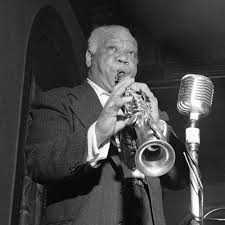
One of the first great soloists in jazz history, Sidney Bechet was a New Orleans Creole whose commanding soprano saxophone and clarinet playing made him a legend on two continents — though it was France, not America, that ultimately gave him his crown.

Sidney Bechet Sidney Bechet
1897
Born in New Orleans
1919
First European Tour
40+
Years Recording
1959
Died in Paris

The Wizard of Jazz: New Orleans' First Great Soloist

Sidney Joseph Bechet was born on May 14, 1897, in the Seventh Ward of New Orleans into a middle-class Creole family. Music filled the Bechet home — his father was an amateur flutist, his brothers were all musicians, and his elder brother Leonard was an accomplished trombonist and bandleader. Sidney largely taught himself, mastering the clarinet by eavesdropping on his brother's instrument and astonishing adult professionals with his gift before he reached his teens. He studied with some of the city's finest teachers, including Lorenzo Tio Jr. and Louis "Big Eye" Nelson, though his autodidactic instincts and refusal to be contained by formal training defined him from the start.

By his early teenage years Bechet was performing with legendary New Orleans bands: the Eagle Band with Bunk Johnson, the Young Olympians, and groups led by King Oliver and Clarence Williams. In 1914 he began traveling with touring shows and carnivals throughout the South. By 1917 he was in Chicago, and by 1919 he had reached New York and joined Will Marion Cook's Southern Syncopated Orchestra for a landmark European tour. It was on this tour that Swiss conductor Ernest Ansermet heard him and wrote an ecstatic review — among the first times a classical musician of standing had praised a jazz player in print — calling him an "extraordinary clarinet virtuoso" with improvisations of "richness of invention" and "daring novelty."
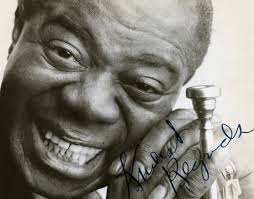
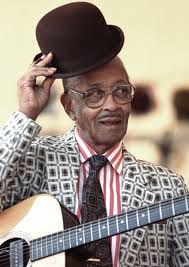
"Duke Ellington once called Bechet 'the very epitome of jazz' — everything he played was completely original."

— Duke Ellington on Sidney Bechet

Through the 1920s and 30s Bechet concentrated increasingly on the soprano saxophone, becoming what may well have been the instrument's first great jazz voice. His wide, distinctive vibrato — shaped in part by his love of Enrico Caruso's operatic singing — was immediately recognizable. He recorded with Clarence Williams's Blue Five (alongside Louis Armstrong in 1924), worked with Duke Ellington, and spent years with Noble Sissle's orchestra. His temperament was famously volcanic, and a shooting incident in Paris in 1929 led to his deportation from France, setting back his European career for years. In New York, work dried up through the 1940s as bebop displaced the New Orleans revival.

Everything changed in 1949 when Bechet performed at the International Jazz Festival in Paris and caused a sensation. He decided almost immediately to make France his permanent home. In Paris he became a genuine celebrity — his records sold in vast quantities, large concert halls turned away crowds, and he was treated with the reverence France reserved for figures like Maurice Chevalier. His recording of "Petite Fleur" became a massive European hit. He performed and recorded tirelessly until his death on May 14, 1959 — his 62nd birthday — in Garches, near Paris. He is buried there, and in Antibes a park bears his name.

Discography

Essential Recordings

Summertime1939
Petite Fleur1952
Les Oignons1949
The Sheik of Araby1941

Sources

Sources & Further Reading

Official
Official Website
Follow
Listen
Buy
Amazon Louisiana Music Factory