Pre-1900
Origins — The Roots of Everything
Before there was jazz, before there was blues, before there was R&B or funk or any of the music New Orleans would eventually give the world, there was a place unlike any other in North America — a port city where African, European, and Caribbean cultures met, mixed, and transformed each other.
Congo Square — Where It All Began
In a large open square at the edge of the French Quarter — today's Louis Armstrong Park in the Tremé — enslaved African people were permitted to gather on Sundays to sing, dance, and play music. This practice, unusual in the American South and permitted by the French and Spanish colonial authorities who governed New Orleans, allowed the preservation and transmission of African musical traditions in a way that was impossible elsewhere in North America.
The music made in Congo Square — the rhythms, the call-and-response patterns, the approach to collective improvisation — became foundational to everything that would follow. Observers described the scene in terms of wonder: hundreds of people gathered, playing instruments, dancing, keeping alive a cultural memory that slavery was designed to destroy. Congo Square is the deepest root of New Orleans music, and through New Orleans music, of American popular music as a whole.
Creole New Orleans — A Unique Cultural Crucible
New Orleans in the 19th century was unlike any other American city. Its history as a French and Spanish colony, its large population of free people of color — many of whom were educated, property-owning, and musically sophisticated — and its proximity to the Caribbean created a cultural environment of extraordinary complexity and richness.
The free Black Creole community of New Orleans had access to European classical music education, opera, and the concert hall. They also maintained deep connections to African and Caribbean musical traditions. This double musical inheritance — European harmonic sophistication combined with African rhythmic complexity — was the precise combination that would produce jazz at the turn of the century.
Social Aid and Pleasure Clubs, which would later become the organizational backbone of the second-line parade tradition, were established during this period as mutual aid societies for the Black community. Their role in supporting the development of New Orleans music — by organizing events, funding musicians, and maintaining the parade tradition — cannot be overstated.
Storyville — The District That Incubated Jazz
In 1897 the New Orleans city council established a legal red-light district — bounded by Basin, Robertson, Customhouse, and St. Louis Streets — that came to be known as Storyville, after the alderman who proposed it. For the next twenty years, this 38-block district was one of the most concentrated entertainment zones in American history, and its brothels, saloons, and dance halls became the primary employment venue for the musicians who were developing what would become jazz.
The music played in Storyville was practical music — it had to keep people dancing, drinking, and spending money. This functional requirement shaped the music profoundly: it had to be rhythmically compelling, emotionally direct, and adaptable to the needs of a rowdy, diverse audience. The musicians who worked Storyville — among them the young Jelly Roll Morton and countless others — developed an approach to performance that was loose, improvisational, and deeply responsive to the crowd.
Storyville was closed by order of the U.S. Navy Department in 1917, concerned about the influence of the district on sailors stationed in New Orleans during World War I. Its closure accelerated the migration of New Orleans musicians northward — to Chicago and New York — where they would introduce jazz to a national audience.
"New Orleans is the only place in the world where you walk down the street and hear music like that coming up from the ground."
— attributed to various musicians1900–1920
Early Jazz — The Music Takes Shape
At the turn of the 20th century, something new was happening in the dance halls and streets of New Orleans. Musicians were taking the ragtime syncopations, the blues feeling, the march rhythms, and the Creole sophistication that surrounded them and making something that had never existed before.
Buddy Bolden — The First King of Jazz
Charles "Buddy" Bolden is widely considered the first jazz musician — the cornetist whose powerful, blues-inflected playing in the dance halls of uptown New Orleans in the late 1890s and early 1900s first brought together the musical elements that would define jazz. No recordings of Bolden survive, but the testimony of musicians who heard him is consistent: he played louder and with more feeling than anyone before him, and the crowds followed him everywhere.
Bolden's band played in a style that was looser and more improvisational than the ragtime ensembles of the day. He bent notes, he played the blues into everything, he improvised freely — and the dancers responded. His legend is enormous precisely because it lives entirely in memory and testimony, unmediated by recordings.
Jazz Is Born — A Music Unlike Any Other
The music that would come to be called jazz emerged in New Orleans in the first decade of the 20th century from a specific set of cultural conditions: the African American musical traditions preserved and developed in Congo Square; the European harmonic language absorbed by the Creole community through classical training; the blues feeling carried up from the Mississippi Delta; the march rhythms of the brass band tradition; and the improvisational freedom demanded by the dance halls and saloons of Storyville.
What made jazz new was not any single one of these elements but their combination — and specifically, the principle of collective improvisation that New Orleans musicians developed. In early New Orleans jazz, the trumpet carried the melody while the clarinet wove elaborations above it and the trombone supplied a bass-register countermelody. All three improvised simultaneously, listening to each other and responding, creating something that was simultaneously composed and spontaneous.
The Brass Band Tradition — Music for the Street
While jazz was developing in the dance halls, a parallel tradition was flourishing in the streets. New Orleans brass bands — organized by Social Aid and Pleasure Clubs to play at funerals and parades — were developing their own distinctive musical identity, rooted in march music but increasingly influenced by the jazz and blues sounds around them.
The New Orleans funeral — with its solemn procession to the cemetery followed by the joyful second-line return — established the emotional and musical template that would define the brass band tradition for more than a century. The movement from grief to celebration, expressed musically as a shift from slow hymns to fast, swinging jazz, encapsulates something essential about New Orleans culture's relationship to life and death.
Artists from this Era
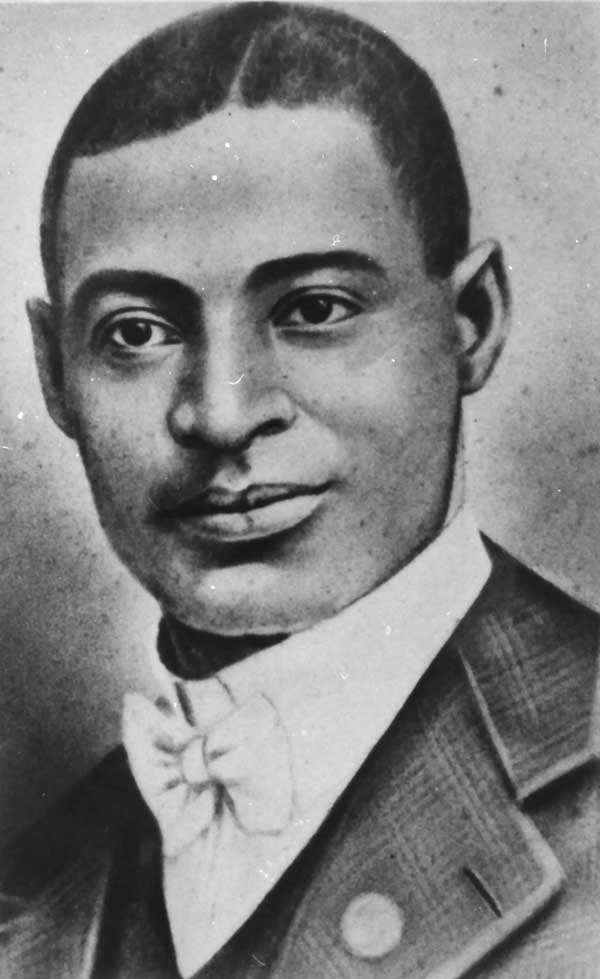 Buddy Bolden
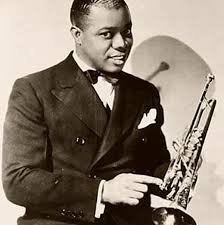 King Oliver
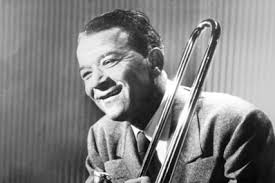 Kid Ory
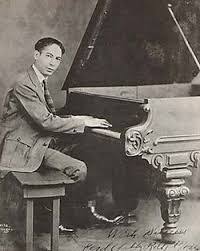 Jelly Roll Morton
1920–1940
The Jazz Age — New Orleans Goes to the World
The closure of Storyville in 1917 sent New Orleans musicians northward, carrying their music with them. In Chicago and New York, the music they brought transformed American popular culture — and the names that emerged from this migration became immortal.
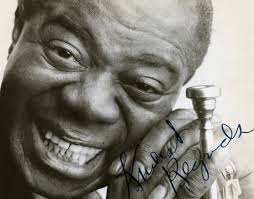
Louis Armstrong — The Most Important Musician in American History
Louis Armstrong was born in New Orleans in 1901 and grew up in the city's streets and institutions — including the Colored Waifs' Home, where he first learned to play cornet. He came of age in the New Orleans jazz tradition, playing in the city's dance halls and on the riverboats, before following his mentor King Oliver to Chicago in 1922.
What Armstrong did in Chicago — and later in New York — fundamentally changed jazz and, through jazz, all of American popular music. His recordings with the Hot Five and Hot Seven between 1925 and 1928 established the vocabulary of jazz soloing that every musician since has worked within or against. His tone, his timing, his melodic invention, his rhythmic freedom — these qualities set a standard that has never been surpassed.
Armstrong became the most famous musician in the world — Ambassador Satch, the face of jazz to billions of people who had never been to New Orleans. But he never forgot where he came from, and the New Orleans tradition never left his playing.
Jelly Roll Morton — The First Great Composer
Ferdinand "Jelly Roll" Morton was born in New Orleans around 1890 and came of age playing in the Storyville district. He was one of the most complex and contradictory figures in jazz history — a self-promoter of almost comic dimensions who nonetheless possessed genuine and extraordinary gifts as a pianist, composer, and arranger.
Morton's recordings with the Red Hot Peppers in 1926 and 1927 are among the most carefully crafted documents in early jazz — proof that the music could be composed and arranged with sophistication while retaining the spontaneity and feeling that defined it. His "Black Bottom Stomp," "Dead Man Blues," and "Grandpa's Spells" remain masterpieces of the form.
The Great Diaspora — New Orleans Music Goes National
The closure of Storyville in 1917 and the broader migration of African Americans northward during and after World War I sent New Orleans musicians to Chicago, New York, Kansas City, and Los Angeles. They carried with them a musical language that was unlike anything else in American culture, and everywhere they went, they changed the music of the place they arrived.
Chicago became the first great center of jazz outside New Orleans, as King Oliver, Louis Armstrong, Kid Ory, and others established the music in the city's South Side clubs. New York followed, and the interaction between the New Orleans tradition and the sophistication of the New York scene produced the swing era of the 1930s — the first truly national popular music in American history.
Artists from this Era
 Louis Armstrong
1940–1960
The R&B Era — The Sound That Shook America
After the swing era, New Orleans found a new musical identity in rhythm and blues — a rolling, piano-driven sound born in the recording studios of Cosimo Matassa that would help create rock and roll and define the sound of a generation.
Cosimo Matassa's Studio — The Room Where History Was Made
In 1945, a young Italian-American named Cosimo Matassa opened J&M Recording Studio on the corner of Rampart and Dumaine Streets in New Orleans. Over the next two decades, virtually every major New Orleans recording would be made in this room — including some of the most important records in the history of American popular music.
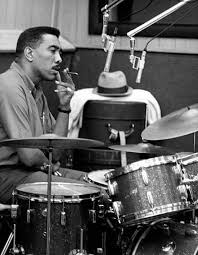
Matassa's studio had a particular sound — warm, spacious, slightly reverberant — that became the sonic signature of New Orleans R&B. The combination of his room acoustics, his engineering instincts, and the extraordinary pool of session musicians available in the city produced a body of recordings that helped define an era. Drummer Earl Palmer, bassist Frank Fields, and pianist Huey "Piano" Smith were among the regulars who gave those recordings their distinctive groove.
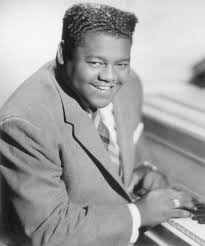
Fats Domino — The First Star of New Orleans R&B
Antoine "Fats" Domino recorded "The Fat Man" at Cosimo Matassa's studio in 1949 — a record that many historians consider one of the first rock and roll records. With his rolling, boogie-woogie-influenced piano style and warm, approachable voice, Domino went on to become one of the biggest selling artists of the 1950s, second only to Elvis Presley in total record sales during the decade.
"Blueberry Hill," "I'm Walkin'," "Ain't That a Shame" — these records, made in New Orleans with New Orleans musicians, were among the first to cross over from the R&B charts to massive pop success, bringing the sound of the city to a national and international audience for the first time since Louis Armstrong.
The Birth of Rock & Roll — New Orleans' Unacknowledged Contribution
New Orleans' contribution to the invention of rock and roll is one of the most important and least acknowledged stories in American music history. The rolling piano style developed by Professor Longhair and popularized by Fats Domino provided the rhythmic and harmonic template for early rock and roll. Earl Palmer's invention of the straight-eight drum beat — replacing the swing rhythms of jazz with the driving pulse that would power rock and roll for generations — happened at Cosimo Matassa's studio.
Little Richard recorded many of his greatest sides in New Orleans, with New Orleans musicians, in a room that had the sound of New Orleans in its walls. The wildness and physical abandon of his performances drew directly on the New Orleans tradition of music as bodily experience. When the Rolling Stones said New Orleans R&B was their primary influence, they were acknowledging a debt that runs through the entire history of rock music.
"New Orleans R&B has a feeling you can't manufacture. It comes from the place, the people, the history."
— Allen ToussaintArtists from this Era
 Fats Domino
 Professor Longhair
 Earl Palmer
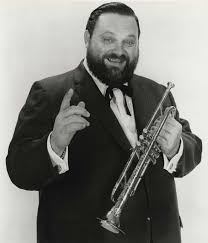 Al Hirt
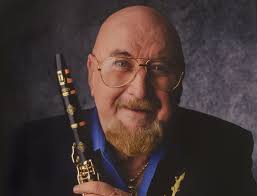 Pete Fountain
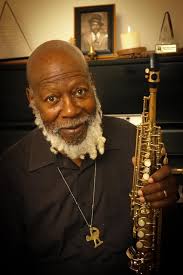 Harold Batiste
1960–1980
Soul & Funk — The Groove That Changed Everything
The 1960s and 70s were one of the richest periods in New Orleans music history — an era defined by the genius of Allen Toussaint, the revolutionary rhythm of the Meters, and a cast of singers and musicians whose work remains foundational to American popular music.
Allen Toussaint — The Architect of New Orleans Sound
Allen Toussaint emerged as a producer, songwriter, and arranger for Minit Records in the late 1950s and quickly became the most important single figure in New Orleans music. His productions for Ernie K-Doe, Irma Thomas, Lee Dorsey, and dozens of others defined the sound of New Orleans R&B in the 1960s — syncopated piano, conversational horn arrangements, and a rhythmic looseness that distinguished New Orleans from the more rigid soul sounds coming from Detroit or Memphis.
Toussaint's influence extended far beyond New Orleans. The songs he wrote — "Working in a Coal Mine," "Fortune Teller," "Ride Your Pony," "Yes We Can Can" — were recorded by artists from the Rolling Stones to Labelle to Glen Campbell. He was one of the great song craftsmen of the 20th century, and the sound he created at his Sea-Saint Studios in the 1970s remains one of the most distinctive in American music.
The Meters — Inventing Funk
When Art Neville, Leo Nocentelli, George Porter Jr., and Joseph "Zigaboo" Modeliste began playing together as the Meters in the mid-1960s, they created a sound that would become one of the most influential in American music history. Their approach to rhythm was radical in its simplicity: strip everything back to the essentials, let each instrument lock into a specific rhythmic role, and let the spaces between the notes be as important as the notes themselves.
Their recordings — beginning with "Cissy Strut" and "Look-Ka Py Py" in 1969 — are among the most sampled in music history, forming the rhythmic backbone of hundreds of hip-hop tracks and influencing the jam band movement, funk, and soul music worldwide. The Meters didn't invent funk — but they showed the world what funk really meant.
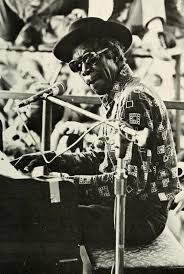
Professor Longhair — Rediscovery of a Master
Henry Roeland Byrd — Professor Longhair — had been one of the central figures of New Orleans R&B piano since the late 1940s, but by the 1960s he had largely faded from view, working as a janitor and card dealer while the music world moved on. His rediscovery in the early 1970s — culminating in his triumphant appearance at the first New Orleans Jazz & Heritage Festival in 1970 — is one of the great second-act stories in American music.
Longhair's rhumba-inflected approach to the blues piano — incorporating Cuban rhythms into a Delta-derived harmonic framework — was so original and so deeply New Orleans that it remained the foundation for virtually every piano player in the city's tradition. His influence on Fats Domino, James Booker, Dr. John, Allen Toussaint, and Jon Batiste is direct and audible. Tipitina's, the great New Orleans music club, took its name from one of his songs.
Artists from this Era
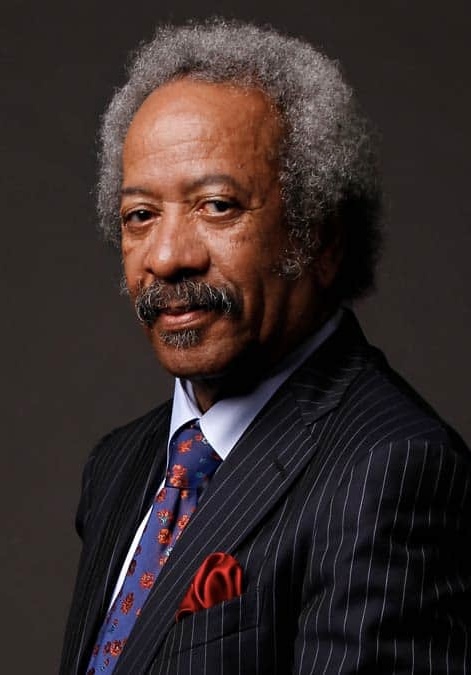 Allen Toussaint
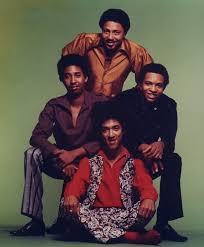 The Meters
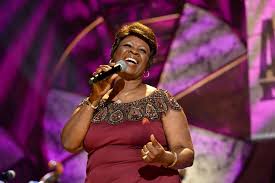 Irma Thomas
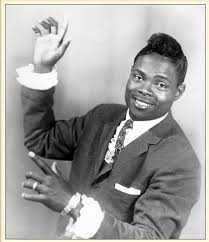 Ernie K-Doe
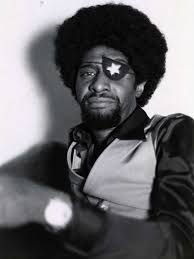 James Booker
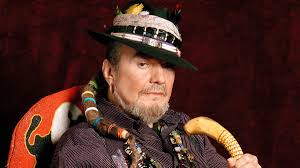 Dr. John
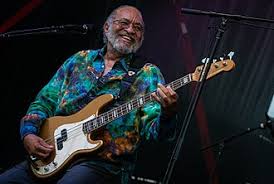 George Porter Jr.
1980–2000
The Renaissance — Jazz Comes Home
The 1980s brought a jazz renaissance to New Orleans — led by a young trumpeter from the city who would become the most celebrated jazz musician of his generation — and a brass band revival that reconnected the music to its street-level roots.
Wynton Marsalis — The Neo-Classical Revolution
Wynton Marsalis was born in New Orleans in 1961, the son of pianist Ellis Marsalis, and grew up immersed in the city's musical culture. When he burst onto the national scene in the early 1980s with his extraordinary technique and his passionate advocacy for jazz as a serious art form, he changed the conversation about American music in ways that are still being felt.
Marsalis's insistence on jazz's legitimacy as a classical art form — comparable to European classical music in its sophistication and historical importance — brought a new seriousness and visibility to the music. His Lincoln Center Jazz Orchestra became the most prominent jazz institution in the country, and his Pulitzer Prize-winning oratorio "Blood on the Fields" (1997) was the first jazz composition to win the prize. He remains the most prominent advocate for jazz as a living tradition.
Tipitina's — A Home for New Orleans Music
Tipitina's opened in 1977 as a home for Professor Longhair, who gave the club its name. Through the 1980s and 1990s it became the anchor of the New Orleans live music scene — the room where every major local act eventually played, where national acts came to experience the energy of a New Orleans crowd, and where the community of musicians, music lovers, and industry figures that sustained the scene gathered.
The Tipitina's Foundation, established later, extended the club's mission into music education and musician support — providing instruments to students, funding for musicians in need, and a institutional commitment to the tradition that went beyond the purely commercial.
The Brass Band Revival — The Street Reclaims Its Music
The Dirty Dozen Brass Band, formed in 1977, and the Rebirth Brass Band, formed in 1983, led a revival of the New Orleans brass band tradition that brought the music to new audiences while deepening its connection to the street-level culture that had always been its home. The Dirty Dozen incorporated bebop harmonics and R&B energy; Rebirth pushed further toward hip-hop and contemporary R&B while maintaining a strong second-line foundation.
The brass band revival was both a musical and a social phenomenon — it reconnected the music to the second-line parade tradition, which had continued throughout the lean years but had been somewhat overlooked by the music industry. Sunday second-line parades, organized by Social Aid and Pleasure Clubs, became increasingly visible as community events and eventually as tourist attractions — though their primary importance remained as expressions of neighborhood identity and community solidarity.
Artists from this Era
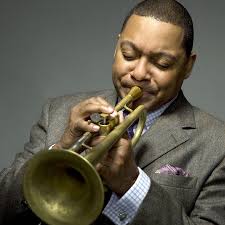 Wynton Marsalis
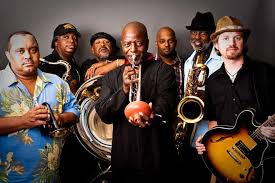 Dirty Dozen Brass Band
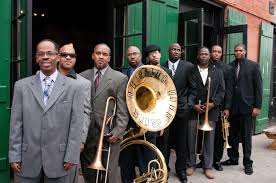 Rebirth Brass Band
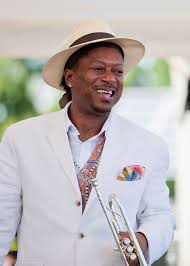 Kermit Ruffins
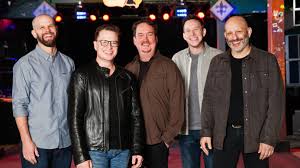 Galactic
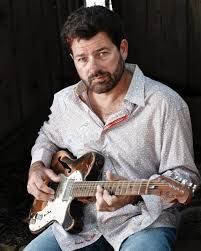 Tab Benoit
2000–Present
Contemporary New Orleans — The Tradition Lives
The story of New Orleans music in the 21st century is defined above all by Hurricane Katrina — the catastrophe that threatened to end the city's musical culture — and by the extraordinary resilience with which that culture reasserted itself in the storm's aftermath.
Hurricane Katrina — The Storm That Tested Everything
On August 29, 2005, Hurricane Katrina made landfall near New Orleans and the subsequent failure of the city's levee system flooded 80% of the city, killed more than 1,800 people, and displaced hundreds of thousands. The storm scattered the community of musicians, club owners, and music lovers that had sustained New Orleans music for generations — suddenly, the people who made the city's musical culture were spread across the country, from Houston to Atlanta to Chicago.
The threat to New Orleans music was existential. The musicians who played the clubs, the owners who ran them, the audiences who filled them, the Social Aid and Pleasure Clubs that organized the second lines — all were gone, or trying to survive in unfamiliar cities. For a moment, it seemed possible that the culture would not come back.
It came back. The musicians returned, the clubs reopened, the second lines resumed. The music became, if anything, more important to the community's sense of identity and resilience — a proof that New Orleans existed, that its culture was real and vital, that the city was worth rebuilding. The post-Katrina period produced some of the most emotionally powerful music in New Orleans history.
Frenchmen Street — The New Center of Live Music
In the post-Katrina years, Frenchmen Street in the Faubourg Marigny became the center of New Orleans' live music scene — a three-block stretch of clubs that offered something the French Quarter had largely lost: authentic, locally-oriented live music for a mixed audience of locals and visitors, without the cover charges and tourist infrastructure of Bourbon Street.
Snug Harbor, d.b.a., The Spotted Cat, The Apple Barrel, The Maison — these clubs hosted the musicians who were rebuilding the scene, creating an environment where jazz, brass band, funk, and blues existed side by side, where young musicians could develop alongside veterans, and where the community could gather to affirm that New Orleans music was alive.
New Orleans Music Today — Deep Roots, New Branches
New Orleans music today is both deeply traditional and constantly evolving. The second-line parade tradition continues every Sunday, organized by Social Aid and Pleasure Clubs that maintain a direct connection to the 19th-century institutions that created the tradition. The brass band scene is as vital as it has ever been, with young bands emerging constantly from the city's neighborhoods. Jazz continues in its multiple forms — from the traditional ensembles at Preservation Hall to the experimental work of musicians on Frenchmen Street.
Jon Batiste — born in New Orleans, from one of the city's great musical families — has become one of the most celebrated musicians in the world, winning multiple Grammy Awards and carrying the New Orleans tradition to audiences of millions. Bounce, the city's own hip-hop, has reached global audiences through artists like Big Freedia. The New Orleans Klezmer All Stars continue to demonstrate the city's extraordinary capacity to absorb diverse musical traditions and make them its own.
The story of New Orleans music is not finished. It is one of the oldest and most continuously generative musical traditions in America — and it shows no signs of stopping.
"New Orleans doesn't just have a musical tradition. It is a musical tradition — the whole city, the whole culture, the whole way of life."
— Allen ToussaintContemporary Artists on this Site
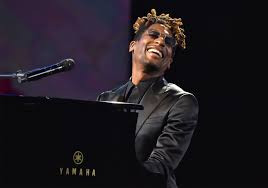 Jon Batiste
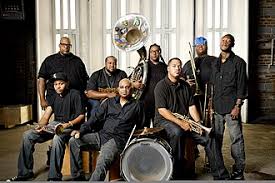 The Soul Rebels
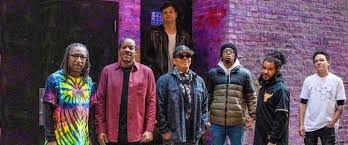 Dumpstaphunk
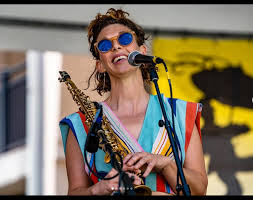 Aurora Nealand
 John Cleary
 Doreen Ketchens