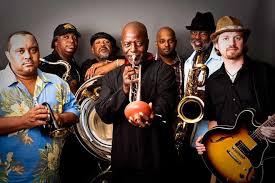
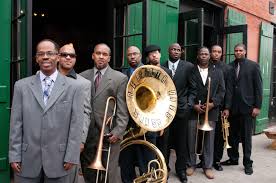
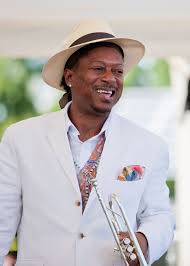
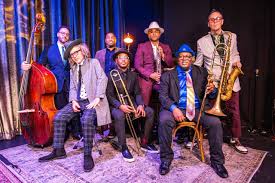
The Dirty Dozen Brass Band formed in New Orleans in 1977, when drummer Benny Jones pulled together a group out of the youth music program singer and guitarist Danny Barker ran at Fairview Baptist Church. The original lineup was Gregory Davis on trumpet, Kirk Joseph on sousaphone, Charles Joseph on trombone, Kevin Harris on tenor sax, Efrem Towns on trumpet and lead vocals, Roger Lewis on saxophone, and Jones and Jenell Marshall on drums. They first called themselves the Original Sixth Ward Dirty Dozen, after the Dirty Dozen Social Aid & Pleasure Club, for whom they were the house band — and despite the name, the band never numbered twelve. From the start, they were interested in expanding beyond the traditional brass band repertoire, incorporating bebop harmonies, funk rhythms, and R&B energy into the format.
Much of the sound was built around Kirk Joseph's sousaphone, which he played like an electric bass, giving the band its funk bottom end. Monday nights at the Glass House, a tiny windowless bar in Central City, belonged to the Dozen from about 1980 to 1987. Sets started after 11 p.m., ran past 2 a.m., cost a dollar, and came with free red beans and rice — and the residency turned brass-band music, a form built for the street, into a nightclub attraction. When touring pulled the band away, they handed the night to the Rebirth Brass Band. They were demonstrating that the brass band format was not a museum piece but a living, evolving form.
In 1980, WWOZ co-founder Jerry Brock made the first professional recording of the band and played it heavily on the station. The band started its own label, Mad Musicians, and put out two 45s — "Lil Liza Jane," "My Feet Can't Fail Me Now," and "Blackbird Special" — then played a high-profile concert at Tipitina's in 1982. They signed with Columbia in 1987; their major-label debut, Voodoo (1989), featured Dr. John, Dizzy Gillespie, and Branford Marsalis, and was followed by The New Orleans Album (1990) and Jelly (1993), a Jelly Roll Morton tribute. The Dirty Dozen went on to tour internationally, recording for Columbia and other major labels and collaborating with artists including Elvis Costello, Dr. John, Dizzy Gillespie, and Widespread Panic. They demonstrated the music's broad appeal and versatility to audiences worldwide.
In 2006, exactly one year after Hurricane Katrina, they released What's Going On, a track-for-track reworking of Marvin Gaye's 1971 album, with guests Chuck D, Bettye LaVette, G. Love, Ivan Neville, and Guru — both a tribute to Gaye and a statement about the city after the storm. In 2023 they won their first Grammy, Best American Roots Performance for "Stompin' Ground" with Aaron Neville, from the documentary Take Me to the River: New Orleans. They had already received OffBeat's Best of the Beat Lifetime Achievement award in 2020, the first brass band ever so honored. They remain one of the essential live acts in New Orleans, touring five continents and more than thirty countries and playing regularly at the New Orleans Jazz & Heritage Festival, led today by founding members Gregory Davis, Kirk Joseph, and Roger Lewis — and now celebrating their 50th anniversary. Their influence on every brass band that came after them — the Rebirth, the Soul Rebels, and dozens of others — cannot be overstated.