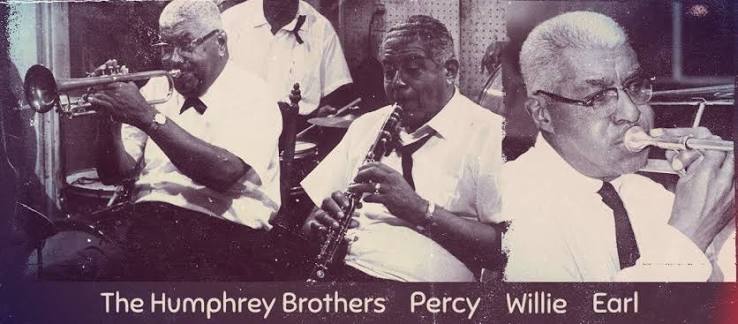
The Humphrey Brothers — Percy, Willie, and Earl — were sons of clarinetist and music teacher Willie Eli Humphrey Sr., and grandsons of "Professor Jim" Humphrey, born James Brown Humphrey in 1859, a classical musician and dance band leader who trained large numbers of musicians along the plantation belt of the Mississippi River delta in the years following Reconstruction. Professor Humphrey predates jazz as a genre, but his students went on to help originate it, and his influence reached even those he never taught directly — including a young Louis Armstrong, who by one account snuck around Tulane Avenue to learn a C# fingering from one of Humphrey's own students, only to be caught by the Professor himself.
Percy Humphrey (1905–1995), a trumpeter and bandleader, led his own group, the Crescent City Joymakers, and served for more than thirty years as leader of the Eureka Brass Band, taking over in 1946. He toured briefly with blues singer Bessie Smith during the Great Depression before working for years as an insurance agent, and played in Sweet Emma Barrett's band at society parties and Bourbon Street gigs. Percy became an original member of the Preservation Hall Jazz Band when it formed in 1961, continuing to perform and tour internationally with the group into the early 1990s. His last public performance came at the New Orleans Jazz & Heritage Festival in 1995, only months before his death.
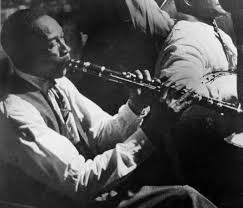
Willie Humphrey (1900–1994), a clarinetist, established himself with New Orleans bands including the Excelsior Band before traveling north, playing in Chicago with Lawrence Duhé and King Oliver — photographs even show him performing in the stands during the 1919 World Series. He made his first recordings in St. Louis in the 1920s before returning home to play for years with the Eureka and Young Tuxedo Brass Bands and, later, Preservation Hall. Willie died of a heart attack in 1994, shortly after playing a set at the Hall.
Earl Humphrey (1902–1971), a trombonist, learned the instrument directly from his grandfather and joined a traveling circus with his father in 1919. He toured widely through the 1920s, recording with Louis Dumaine in 1927, before retiring to Virginia in the 1940s. He returned to New Orleans in 1963 and was urged back into music, joining brother Percy's band and recording as a bandleader in his own right on albums including Igor's Imperial Orchestra (1966) and Earl Humphrey & His Feetwarmers (1967). Together, the three brothers recorded as The Humphrey Brothers Band and, alongside their individual work, remain foundational figures in the story of how New Orleans traditional jazz survived into the modern era.