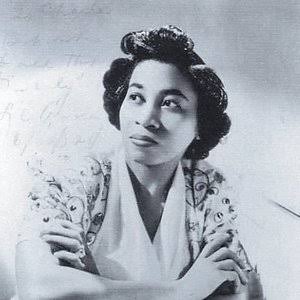
Emma Barrett was born March 25, 1897, in New Orleans, Louisiana, to Capt. William B. Barrett, who she said had fought for the North in the Civil War. She began playing piano at age seven, entirely self-taught, and was performing publicly in the bars, clubs, and rougher venues of New Orleans by the time she was twelve. In the early 1920s, Barrett joined Papa Celestin's Original Tuxedo Jazz Orchestra, and when the band split in 1928, she continued on with Bebe Ridgley's Tuxedo Jazz Orchestra for roughly the next decade. She also performed during this period with Armand Piron, John Robichaux, Sidney Desvigne, and Louis Armstrong.
Barrett earned the nickname "the Bell Gal" for her trademark red skullcap and garters adorned with jingling Christmas bells, a flamboyant stage presence matched by wry wit and double entendres in her vocal delivery. A pioneer for women in a male-dominated field, she weathered condescension from her male peers with tenacity and good humor, eventually winning their respect and performing alongside them as an equal and, ultimately, a leader. In 1947, after a period of semi-retirement, Barrett took a steady gig at Happy Landing, a club on the New Orleans lakefront, and in the 1950s worked with bandleader Percy Humphrey and clarinetist Israel Gorman while also leading her own group, sometimes touring as Sweet Emma and the Bells.
Barrett's 1961 recording debut, The Bell Gal and Her Dixieland Boys, part of Riverside Records' New Orleans: The Living Legends series, brought her recognition far beyond the Crescent City and featured accompaniment from banjoist Emanuel Sayles, bassist Placide Adams, and drummer Paul Barbarin. At the height of the 1960s jazz revival, she became the featured pianist with the Preservation Hall Jazz Band, leading the group on tours to Memphis, Minneapolis, and a memorable 1965 trip to Disneyland, and appeared as a vocalist and pianist in the 1965 film The Cincinnati Kid. Even after suffering a stroke that left her partially paralyzed, Barrett continued to perform and occasionally record until her death on January 28, 1983, in Metairie, Louisiana, closing out a career that had spanned seven decades and helped define the sound of Preservation Hall for generations to come.