Ragtime · Traditional Jazz · Dance Band

Lars Edegran’s New Orleans Ragtime Orchestra

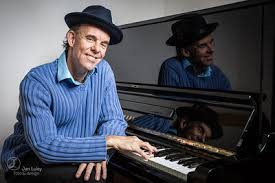
Founded 1967 — Led by Swedish pianist Lars Edegran, born Stockholm 1944

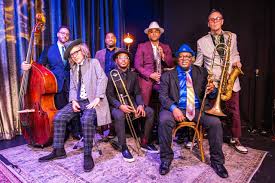
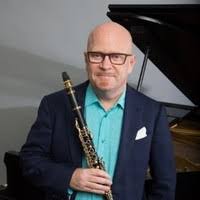
In 1967, Swedish pianist Lars Edegran gathered some of New Orleans’ finest traditional players to do something nobody else was doing: bring orchestrated ragtime back to life. Working from the rediscovered dance-band manuscripts of bandleader John Robichaux at Tulane University’s jazz archive, the New Orleans Ragtime Orchestra made the cakewalks, marches, and rags of 1890–1920 swing again — and nearly sixty years later, it is still going.

Lars Edegran’s New Orleans Ragtime Orchestra

Start Here

Never heard Lars Edegran’s New Orleans Ragtime Orchestra before?

🎵 Notable

The 1971 debut LP

🎵 Then Try

Grace and Beauty (2001)

🎬 Also

His Pretty Baby score

“It is hard to imagine traditional jazz in New Orleans today without Edegran.”

— OffBeat

Editorial

Why We Love Lars Edegran’s New Orleans Ragtime Orchestra

Long before the ragtime revival had a name, Lars Edegran was already doing the work. A Swedish kid who fell in love with Kid Ory records, crossed an ocean, and dug century-old dance-band manuscripts out of a university archive — then spent the next sixty years making them swing. The New Orleans Ragtime Orchestra isn’t a nostalgia act; it’s a rescue mission that never ended, led by a man who treats the music of 1900 like it’s brand new. When those cakewalks and marches lift off, you hear a whole lost century of New Orleans Saturday nights.

The Orchestra That Brought Ragtime Back to the Dance Floor

Lars Ivar Edegran was born in Stockholm, Sweden, in 1944 and fell for traditional jazz early, listening to his father’s records — Kid Ory, Bunk Johnson, Fats Waller. He played in New Orleans-style groups in Sweden before following the music across the Atlantic. He’d come to America to work for the famed Chicago label Delmark Records; four months later a trip to New Orleans changed his plans for good. As he told OffBeat, “I came to check it out and decided I liked it better.” He settled into the city’s jazz life, eventually becoming office manager of the GHB Jazz Foundation, the label empire built by his friend, jazz collector George H. Buck.

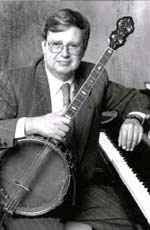
In 1967 Edegran founded the New Orleans Ragtime Orchestra around an extraordinary find: a trove of orchestrated, turn-of-the-century ragtime sheet music by bandleader John Robichaux, held at Tulane University’s Archive of New Orleans Jazz. The founding lineup was a roll call of traditional jazz royalty — violinist William Russell, trumpeter Lionel Ferbos, clarinetist Orange Kellin, trombonist Paul Crawford, bassist Walter Payton Jr., and drummer John Robichaux, the bandleader’s nephew. Their mission was simple and radical: play the composer’s orchestrations faithfully, but with the New Orleans rhythm and swing the written ragtime tradition was missing. Cakewalks, marches, blues, and rags — the popular music of 1890 to 1920 — swung again.
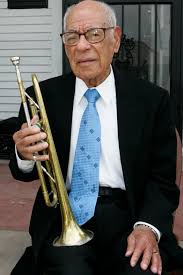
The idea was to follow the composer’s intention, but add the New Orleans rhythm & swing that is lacking in many ragtime recordings.

— Delmark Records liner notes

The orchestra was soon a fixture far beyond New Orleans: it played the Newport Jazz Festival in the early 1970s as part of the Louis Armstrong birthday celebration, alongside Mahalia Jackson and the Eureka Brass Band, and toured Europe in 1974. Edegran’s own reach kept growing — he wrote music for the 1978 film Pretty Baby and spent five years in New York as composer and player for the musical One Mo’ Time. Back home, he became a regular at the Palm Court Jazz Cafe in the French Quarter and at Preservation Hall, and in 2018 the Preservation Hall Foundation honored him, alongside Orange Kellin and Lester Caliste, as a master practitioner of the New Orleans tradition.

Decades on, the New Orleans Ragtime Orchestra remains one of the city’s great living arguments that the music before jazz deserves a bandstand of its own. Edegran still leads the orchestra on annual summer tours of Europe, and the band’s records — from the 1971 Arhoolie debut to Creole Belles and Grace and Beauty — are essential listening for anyone who wants to hear what a New Orleans dance hall sounded like a century ago, played by people who know exactly how it felt.

Discography

Essential Recordings

New Orleans Ragtime Orchestra1971
Pickles and Peppers1991
Creole Belles1994
Grace and Beauty2001

Sources

Sources & Further Reading

Official
Official Website
Follow
Listen
Buy
Amazon Louisiana Music Factory Euclid Records
All Artists · Browse by Genre · Browse by Venue