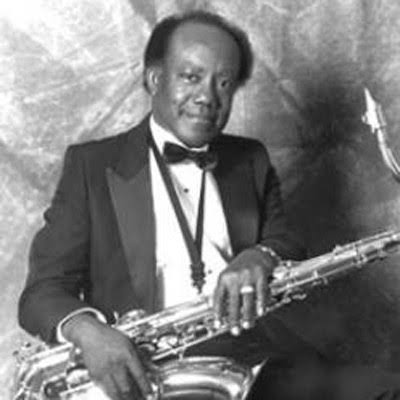
James Rivers was born in New Orleans on April 18, 1937, and grew up in the city’s 6th Ward — the musical incubator now known as Treme. He picked up the clarinet at 14, moved to the saxophone at Booker T. Washington High School, and formed his first band, James Rivers and the Peacocks, with schoolmate and guitarist Alvin “Shine” Robertson. Eager to hit the road, the two quit school and joined a touring show managed by Percy Stovall, staying on the road for about seven years.
Back home, Rivers became a fixture of the New Orleans R&B scene at its 1950s and ’60s peak. His horn is all over the classics: Huey “Piano” Smith’s “Don’t You Just Know It,” Al “Carnival Time” Johnson’s “Carnival Time,” and Frankie Ford’s “Sea Cruise.” A regular in Cosimo Matassa’s and Allen Toussaint’s studios, he backed Irma Thomas, Professor Longhair, Earl King, and Ernie K-Doe — and on the national stage, Sam Cooke and Jackie Wilson. Through the 1960s he held the sax chair with Deacon John & the Ivories.
“Sometimes I used to practice and go out at night to Lake Pontchartrain, in contemplative moments, where it would be quiet and listen at the waves and the water. Just to be alone, like to hear the different sounds of the water beating against the seawall, and I could meditate.”
— James Rivers, to Jason Berry
Rivers never stopped collecting instruments: tenor, alto, and soprano saxophones, clarinet, flute, harmonica, piano, organ, guitar — and bagpipes, which he taught himself after a school band’s televised football performance caught his ear, ordering the pipes from Werlein’s and learning from records. He closed his shows with a robust bagpipe “Amazing Grace” that turned whole rooms into choirs. A regular at Tyler’s Beer Garden on Magazine Street, he was heard there by Clint Eastwood — in town shooting Tightrope — who brought him onto the soundtrack. Rivers went on to contribute to Ratboy, Bird, A Perfect World, and The Bridges of Madison County, in which he also appears on the bandstand.
For decades he fronted his own band, the James Rivers Movement, a Jazz Fest and French Quarter Fest staple and a favorite at jazz brunches, with a standing gig at Fat Harry’s on St. Charles Avenue. His own records include Olé (1978) and the jazz-funk Thrill Me (1981), cut at Allen Toussaint’s Sea-Saint studio. James Rivers died on July 5, 2026, at 89 — a Treme original who played on the city’s most famous records and then spent a lifetime playing them back to the city, live.