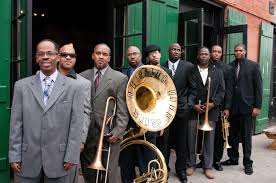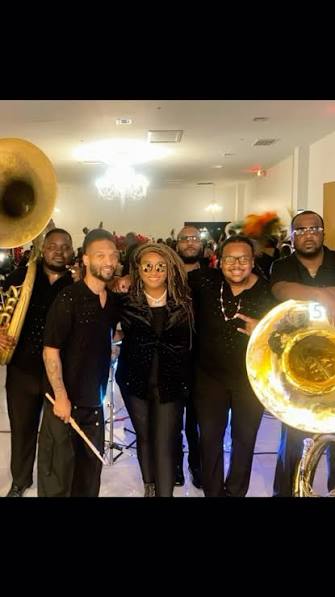
The Original Pinettes Brass Band was formed in 1991 at St. Mary's Academy, a historically Black all-girls Catholic high school in New Orleans East, when band director Jeffery C. Herbert pulled together roughly sixteen girls, many from the school's marching band. He named the group the Pinettes, a feminization of his own band's name, the Original Pinstripe Brass Band. At the school's 1992 spring concert, the band played Rebirth Brass Band's "Freedom," and the enthusiastic crowd response convinced Herbert the group could move beyond traditional New Orleans jazz into contemporary brass band territory — a shift that also offered a practical benefit, helping some members' families offset the cost of tuition through the group's growing commercial success.
Herbert continued managing the Pinettes even after leaving St. Mary's to direct the band at John McDonogh High School in 1993, and again after moving to Southern University in Baton Rouge in 1998, at which point management passed to the band's own members. The Pinettes weathered significant membership turnover over the years, especially after Hurricane Katrina scattered the city in 2005, when the group recruited new members to continue the band's legacy. Christie Jourdain, originally a snare drum alternate at the band's founding, became the group's lead member and continues to guide the ensemble today.
In 2013, the Pinettes released their first full-length album, Finally, and that same year won Red Bull's "Street Kings" brass band blowout competition, beating three male bands and earning the crowd's new nickname for them: "Street Queens." The band has gone on to share stages with Arcade Fire and Katy Perry, and performs regularly at venues and festivals across the city, including Preservation Hall, the New Orleans Jazz & Heritage Festival, Satchmo Fest, Essence Music Festival, and French Quarter Festival. Drawing members from a wide range of backgrounds — from college students to working professionals — the Original Pinettes have built what they describe as a true sisterhood, still working to prove, more than three decades later, that music is a universal language regardless of gender.