
Hip-Hop · Bounce

Juvenile

Born Terius Gray, March 26, 1975, New Orleans, LA (Magnolia Projects)

Juvenile turned Magnolia Projects slang and New Orleans bounce rhythms into a Billboard-topping sound, first as one of Cash Money Records’ Hot Boys and then as a solo star whose 400 Degreez helped define an entire era of Southern hip-hop.

Juvenile

Start Here

Never heard Juvenile before?

🎵 Signature Sound

Bounce-born Southern rap

🎬 Key Record

400 Degreez (1998)

👑 Peak

“Slow Motion” — Billboard Hot 100 #1

400 Degreez went quadruple platinum — “Ha” and “Back That Azz Up” made Magnolia slang a national language.

Editorial

Why We Love Juvenile

Before Juvenile, the country didn’t know what bounce was. After him, everybody was speaking it. Terius Gray took the call-and-response chants of the Magnolia projects, Mannie Fresh’s trunk-rattling production, and a drawling, unhurried flow, and turned them into 400 Degreez — one of the foundational texts of Southern hip-hop and the record that made Cash Money a national powerhouse. “Back That Azz Up” is still the ultimate test of any dance floor; “Slow Motion” gave him a posthumous-style Hot 100 No. 1 all his own. Three decades in, through UTP, Atlantic, reunions, and a whole new generation sampling his slang, Juvie remains what he’s always been: the Magnolia’s finest, and the South’s most quotable MC.

From Bounce to Billboard

Terius Gray, better known as Juvenile, was born March 26, 1975, and raised in New Orleans' Magnolia housing projects. He began rapping at age ten, and by the early 1990s had made a name for himself in the city's bounce scene, appearing on tracks by bounce artist DJ Jimi before releasing his own debut album, Being Myself, on the local Warlock label in 1995.

Juvenile signed with Cash Money Records, owned by New Orleans natives Ronald “Slim” Williams and Brian “Baby” Williams, releasing Solja Rags in 1997 to strong underground success. That same year he joined fellow Cash Money artists B.G., Turk, and a teenage Lil Wayne to form the Hot Boys. His 1998 album 400 Degreez, distributed nationally through Universal, broke him wide open: its singles “Ha” and “Back That Azz Up” both topped the Billboard charts, and the album became a foundational text of Southern hip-hop. He continued a prolific run through the following decades, releasing Tha G-Code (1999), Project English (2001, certified gold), and Juve the Great (2003), which spawned the No. 1 hit “Slow Motion.” His Slidell, Louisiana home was destroyed by Hurricane Katrina in 2005, an experience that shaped his 2006 Atlantic Records album Reality Check.

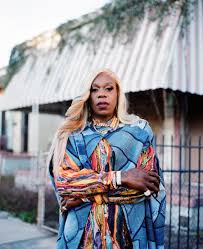
“Juvenile turned Magnolia Projects slang into a Billboard-topping sound the whole country ended up speaking.”

— Editorial

Discography

Essential Recordings

400 Degreez1998
Tha G-Code1999
Project English2001
Juve the Great2003

Sources

Sources & Further Reading

All Artists · Browse by Genre · Browse by Venue